
How to Balance Your Garage Door: A Step-by-Step Guide
Learn how to balance garage door systems with this comprehensive guide. Discover testing methods, adjustment techniques, and maintenance tips for LA homeowners.

Why Garage Door Balance Matters for LA Homeowners
Learning how to balance garage door systems is one of the most important maintenance skills Los Angeles homeowners can develop. A properly balanced garage door operates smoothly, quietly, and efficiently, while an unbalanced door creates unnecessary strain on every component of your system. In the diverse climate of Southern California, where temperature fluctuations and coastal humidity affect metal components, maintaining proper balance becomes even more critical for long-term performance.
When your garage door balance is off, your opener motor works significantly harder to lift and lower the door. This increased workload translates directly to shortened opener lifespan and higher energy consumption. The opener is designed to assist with door movement, not to carry the entire weight of the door. A balanced door should be easy to lift manually, with the springs doing most of the heavy lifting. When balance issues develop, the opener compensates for this mechanical deficiency, leading to premature wear on gears, circuit boards, and motor components.
The impact on energy efficiency is particularly relevant for Los Angeles homeowners who use their garage doors multiple times daily. An unbalanced door forces the opener to draw more electrical current during each cycle, compounding energy waste over thousands of annual operations. Additionally, improper balance accelerates wear on springs, cables, rollers, and tracks, creating a cascade of maintenance issues that could have been prevented with regular balance checks and adjustments.
Understanding garage door spring tension and how it relates to overall balance is fundamental to proper maintenance. The springs counterbalance the door's weight, making it possible to operate smoothly whether you're using an automatic opener or lifting manually. When springs lose tension over time or become misadjusted, the entire system falls out of equilibrium, creating the balance problems that plague many garage door systems throughout the greater Los Angeles area.
Signs Your Garage Door Is Out of Balance
Recognizing unbalanced garage door symptoms early can prevent serious damage and safety hazards. The most obvious indicator is uneven movement when the door opens or closes. Watch carefully as your door travels along its tracks. A balanced door moves smoothly and evenly from both sides, while an unbalanced door may tilt, with one side rising faster or higher than the other. This asymmetrical movement places unequal stress on cables, rollers, and track hardware.
Visual and Operational Warning Signs
One of the clearest signs of balance issues is when your door stops at an angle rather than sitting level when fully open or closed. This tilting indicates that one side of the door is carrying more weight than the other, typically due to spring tension differences. You might also notice that the door feels unusually heavy when lifting it manually, or conversely, that it feels too light and wants to spring upward rapidly when you release it.
Excessive noise during operation is another telltale symptom of balance problems. When a door is out of balance, rollers grind against tracks, cables strain against pulleys, and the entire system vibrates more than it should. These sounds often manifest as grinding, squeaking, or rattling noises that worsen over time. If you're experiencing persistent noise issues, our Noise Repair services can diagnose whether balance is the underlying cause.
Garage Door Opener Strain Indicators
Your garage door opener provides valuable clues about balance problems. If the opener motor runs longer than usual, makes laboring sounds, or the door moves more slowly than it used to, these are signs that the opener is compensating for an unbalanced door. Modern openers have safety features that may cause the door to stop mid-cycle or reverse unexpectedly when excessive resistance is detected. While these safety reversals can have multiple causes, balance issues are among the most common.
Pay attention to how your opener behaves when closing the door. An unbalanced door may slam down too quickly, or conversely, may struggle to close completely. The opener chain or belt may appear excessively loose or tight, and you might notice the motor housing shaking more than normal during operation. These symptoms indicate that your opener is working against mechanical disadvantages created by poor balance, and addressing the balance issue will restore proper function and extend opener life.
Pro Tip: Perform a visual inspection of your garage door from inside the garage while it's in various positions. Look for gaps between the door and weatherstripping, uneven spacing between door sections, or cables that appear looser on one side than the other. These visual cues often reveal balance problems before they cause serious damage.
Cable and Hardware Stress Patterns
Examine your garage door cables closely for signs of balance-related stress. Cables on an unbalanced door may show uneven wear patterns, with one cable appearing more frayed or stretched than its counterpart. You might also notice that cables hang at different tensions when the door is fully open, or that one cable appears to be carrying more load than the other. These discrepancies indicate that the door's weight distribution is uneven, requiring balance adjustment to prevent cable failure.
Track alignment issues often accompany balance problems. When a door consistently pulls to one side due to improper balance, it can gradually push tracks out of alignment, creating a feedback loop where balance and alignment issues compound each other. If you notice your door binding against tracks or if rollers appear to be wearing unevenly, balance correction should be part of your repair strategy. For severe track issues, professional Track Repair may be necessary alongside balance adjustment.
How to Perform a Simple Garage Door Balance Test
The garage door balance test is a straightforward diagnostic procedure that every homeowner should know how to perform. This test, commonly called the halfway test method, provides immediate insight into your door's balance condition and helps you determine whether professional adjustment is needed. Before beginning any testing, ensure that your garage door opener is disconnected to prevent accidental operation during the test.
The Halfway Test Method Step by Step
To perform the manual garage door balance test, start with the door in the fully closed position. Locate the emergency release cord hanging from your opener trolley, typically a red handle, and pull it to disengage the opener from the door. This disconnects the automatic opener and allows you to operate the door manually. Once disengaged, carefully lift the door to approximately the halfway point, which is typically around three to four feet from the ground for standard residential doors.
Release the door gently at this halfway position and observe what happens. A properly balanced door should remain stationary or move very little when released at the midpoint. If the door stays in place without assistance, your springs are providing the correct counterbalance to the door's weight. This equilibrium is exactly what you want to see during a balance test.
If the door falls toward the closed position when released, this indicates that the springs have insufficient tension and are not providing enough lifting force. Conversely, if the door rises toward the open position, the springs have too much tension and are overpowering the door's weight. Either condition represents a balance problem that needs correction. For Los Angeles homeowners dealing with these issues, our Spring Replacement services can restore proper tension and balance.
Interpreting Test Results
The speed at which an unbalanced door moves during the test provides additional diagnostic information. A door that drops slowly may have only minor tension loss, while a door that falls rapidly indicates significant spring fatigue or failure. Similarly, a door that rises slowly suggests mild over-tensioning, while a door that shoots upward rapidly indicates dangerous over-tensioning that requires immediate professional attention.
Perform the test at multiple points along the door's travel path for more comprehensive results. Try releasing the door at quarter-height, half-height, and three-quarter-height positions. A well-balanced door should remain stable at all these points, though slight variation is normal. Significant differences in behavior at different heights suggest complex balance issues that may involve multiple components, including springs, cables, and even structural problems with the door itself.
Safety Precautions During Testing
Never perform balance testing if you observe broken springs, frayed cables, or other obvious damage to your garage door system. These conditions create serious safety hazards, and testing should only proceed after repairs are completed. Always maintain a firm grip on the door when lifting it manually, and never place your fingers between door sections or near pinch points where moving parts come together.
Keep children and pets away from the garage during balance testing. The door's weight and the potential for unexpected movement create risks that require your full attention and clear workspace. If the door feels excessively heavy or behaves unpredictably during testing, lower it carefully to the closed position and contact a professional technician rather than attempting further diagnosis or adjustment.
Step-by-Step Guide to Adjusting Garage Door Balance
Understanding how to balance garage door systems requires knowledge of spring mechanisms and cable systems. However, it's crucial to recognize that garage door tension adjustment involves high-tension components that store tremendous force. Torsion springs, which are mounted on a shaft above the door, can cause severe injury if handled improperly. Extension springs, which run along the horizontal tracks, also pose significant risks. This section provides educational information about the adjustment process, but homeowners should carefully evaluate their skills and safety preparedness before attempting these procedures.
Understanding Spring Types and Tension Systems
Garage doors typically use one of two spring systems: torsion springs or extension springs. Torsion springs are wound tightly on a shaft above the door and provide lifting force through rotational tension. These springs are adjusted by adding or removing tension through quarter-turn increments using winding bars inserted into the spring's winding cone. Extension springs stretch and contract as the door moves, with tension adjusted by changing the hook position on the track bracket or adjusting the cable length.
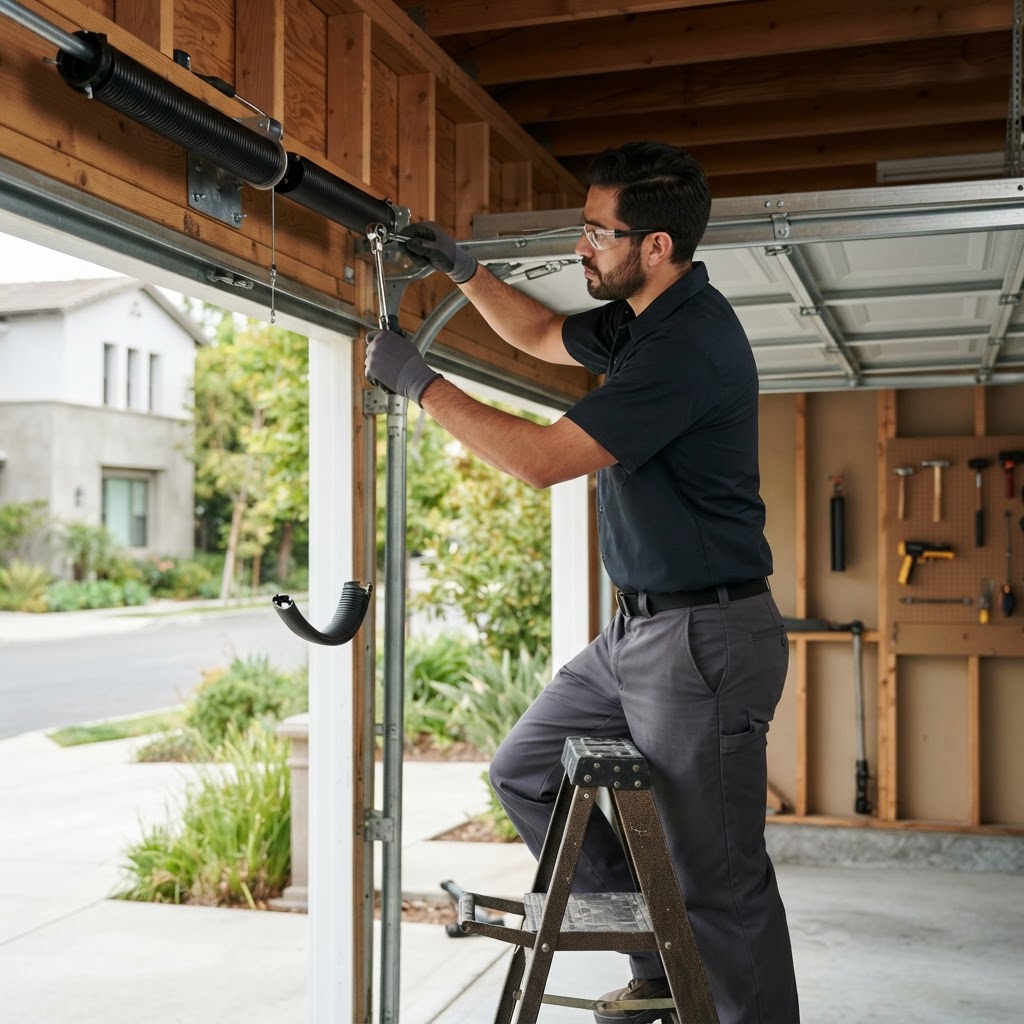
Identifying your spring type is the first step in any balance adjustment procedure. Torsion springs are visible as one or two large springs mounted horizontally on a shaft above the door opening. Extension springs are visible as long springs running parallel to the horizontal tracks on each side of the door. Each system requires different tools and techniques for adjustment, and torsion springs in particular demand specialized winding bars and safety procedures that most homeowners lack.
Professional Adjustment Procedures Overview
Professional technicians follow specific protocols when adjusting garage door spring tension. For torsion springs, the process involves securing the door in the closed position, loosening set screws on the winding cone, and carefully adjusting spring tension using proper winding bars. Each quarter-turn adjustment changes the lifting force, with typical adjustments ranging from one to four quarter-turns depending on how far the door is out of balance.
Extension spring adjustments involve changing where the spring hook connects to the track bracket or adjusting the S-hook position on the cable. This changes the effective length of the spring and thus its tension. Technicians ensure that both sides of the door receive identical adjustments to maintain even balance. After any spring adjustment, cables must be inspected and adjusted if necessary to ensure proper tracking and even weight distribution.
Cable Alignment and Balance
Learning how to balance garage door cables is equally important to spring adjustment. Cables connect the bottom brackets of the door to the spring system, transferring lifting force from springs to the door. If cables are uneven in length or tension, the door will tilt even if springs are properly adjusted. Cable adjustment involves ensuring that both cables have equal tension and that they're properly seated in their drums or pulleys.
Cable problems often manifest as visible slack on one side when the door is closed, or as uneven winding on cable drums when the door is open. Correcting these issues requires loosening bottom bracket bolts, adjusting cable length or positioning, and then carefully re-tightening all hardware. This work must be performed with the door properly supported and with springs in a safe state, as cable tension is directly related to spring force. For complex cable issues, professional Cable Repair ensures safe and accurate correction.
Testing and Fine-Tuning Adjustments
After any adjustment to springs or cables, the balance test should be repeated to verify improvement. Professional technicians make incremental adjustments, testing after each change to avoid over-correction. The goal is to achieve a door that remains stationary when released at the halfway point and that feels light but controlled when lifted manually. This fine-tuning process may require multiple adjustment cycles to achieve optimal balance.
Once balance is achieved, all hardware must be properly secured. Set screws on torsion spring winding cones must be tightened to specification, cable brackets must be firmly bolted, and all adjustment points must be verified for security. The opener should then be reconnected and tested through multiple complete cycles to ensure that the newly balanced door operates smoothly with the automatic system.
When to Call a Professional
While understanding garage door balance principles is valuable for all homeowners, many balance-related issues require professional expertise and specialized tools. Recognizing when to call a professional protects your safety and prevents damage that can result from improper adjustment attempts. Throughout Los Angeles and Southern California, professional garage door technicians handle balance issues daily, equipped with the proper tools, training, and safety equipment that most homeowners lack.
Safety Concerns That Require Professional Service
Any situation involving broken or damaged springs demands immediate professional attention. A broken torsion spring releases its stored energy suddenly, creating a loud bang and leaving the door extremely heavy and dangerous to operate. Never attempt to adjust or replace torsion springs without proper training and tools. The winding bars used for torsion spring adjustment must be the correct size and strength, and the technician must understand proper winding procedures and safety protocols to prevent serious injury.
Extension spring repairs also warrant professional service, particularly when springs have broken or when safety cables are missing or damaged. Extension springs can snap and become projectiles if they fail while under tension. Professional technicians install and maintain safety cables that run through the center of extension springs, containing the spring if it breaks and preventing dangerous whipping action. If your extension springs lack safety cables or if you observe any spring damage, contact professionals rather than attempting repairs yourself.
Garage door balance safety extends beyond springs to include cables, drums, and brackets. Bottom brackets, where cables attach to the door, are under extreme tension and can cause severe injury if loosened improperly. Cable drums on torsion spring shafts are similarly dangerous, as they rotate under spring force. Any work involving these components should be performed by trained technicians who understand the proper sequence of operations to safely release and restore tension.
Complex Balance Issues Requiring Expert Diagnosis
Some balance problems stem from multiple interrelated issues that require comprehensive diagnosis. If your door fails the balance test even after spring adjustment, the problem may involve structural issues with the door itself, such as warped sections, broken struts, or panel damage. These conditions change the door's weight distribution in ways that simple spring adjustment cannot correct. Professional technicians can identify these underlying problems and recommend appropriate solutions.
Doors that have been off-track or that have experienced impact damage often develop balance issues that are symptoms of larger structural problems. The door may be twisted in its frame, tracks may be bent or misaligned, or the door's internal reinforcement may be compromised. These situations require the diagnostic skills and repair capabilities that professional services provide. Our Off Track Door specialists frequently address balance issues as part of comprehensive track and alignment repairs.
When DIY Adjustments Don't Resolve the Problem
If you've performed the balance test and attempted minor adjustments within your comfort level, but the door still exhibits balance problems, professional service is the appropriate next step. Persistent balance issues may indicate that springs have reached the end of their service life and need replacement rather than adjustment. Springs gradually lose tension over thousands of cycles, and eventually, no amount of adjustment can restore proper function. Replacement becomes necessary to achieve proper balance.
Homeowners in areas throughout Los Angeles, from Burbank to Santa Monica, benefit from professional balance services that address not just immediate symptoms but underlying causes. Professional technicians inspect all components during a balance service call, identifying wear patterns, alignment issues, and potential failure points that homeowners might overlook. This comprehensive approach prevents future problems and ensures that your door operates safely and efficiently.
Opener Integration and Balance Optimization
Modern garage door openers have sophisticated sensors and force settings that must be properly adjusted to work with a balanced door. After balance correction, opener force limits should be recalibrated to match the door's new operating characteristics. This ensures that safety reversals function correctly and that the opener doesn't work harder than necessary. Professional technicians understand the relationship between door balance and opener settings, optimizing both for best performance. If you're experiencing opener-related issues alongside balance problems, our Opener Repair services provide integrated solutions.
Smart garage door openers add another layer of complexity, with app-based diagnostics and automated alerts that can help identify balance issues early. However, these systems still require proper mechanical balance to function optimally. Professional service ensures that both the mechanical and electronic aspects of your system work together seamlessly, providing the convenience and security that modern garage door systems offer.
Maintaining Proper Balance: Regular Inspection Tips and Prevention Strategies
Proactive maintenance is the key to preventing garage door balance problems and extending the life of all system components. Regular inspections allow you to identify minor issues before they develop into major problems, saving time and preventing the inconvenience of unexpected failures. For Los Angeles homeowners, establishing a maintenance routine adapted to Southern California's climate conditions helps ensure reliable garage door operation year-round.
Monthly Visual Inspection Checklist
Perform a visual inspection of your garage door system at least once per month. Start by observing the door during normal operation, watching for smooth, even movement on both sides. Listen for unusual noises that might indicate developing problems. With the door closed, inspect the springs for signs of rust, separation, or visible gaps in the coils. Check cables for fraying, particularly near the bottom brackets and at the cable drums where wear typically occurs first.
Examine the rollers in their tracks, looking for worn wheels or bent stems. Rollers should rotate freely without excessive play or binding. Inspect track alignment by checking that tracks are plumb and that the distance between tracks remains consistent from top to bottom. Look for loose hardware, particularly the bolts securing tracks to the wall and the brackets connecting door sections. Tighten any loose fasteners you discover, but avoid over-tightening, which can strip threads or warp components.
Quarterly Balance Testing
Perform the halfway balance test every three months as part of your preventive maintenance routine. This regular testing establishes a baseline for your door's performance and allows you to detect gradual changes in balance before they become problematic. Keep a simple log noting the date and results of each test. If you notice that the door is gradually becoming harder to lift or that it no longer stays in place at the halfway point, schedule professional service before complete balance failure occurs.
Seasonal changes can affect garage door balance, particularly in coastal Los Angeles areas where humidity levels fluctuate. Metal components expand and contract with temperature changes, and springs may lose tension more rapidly during periods of heavy use. Testing balance at the start of each season helps you stay ahead of these environmental effects and maintain optimal performance throughout the year.
Lubrication and Component Care
Proper lubrication reduces friction and wear on moving parts, indirectly supporting balance by ensuring smooth operation. Every three to six months, apply appropriate lubricant to springs, rollers, hinges, and tracks. Use a silicone-based or lithium-based garage door lubricant rather than general-purpose oils, which can attract dust and create sticky residue. For detailed guidance on proper lubrication techniques, refer to our comprehensive guide on How to Lubricate Your Garage Door.
Clean tracks periodically to remove debris, dirt, and old lubricant buildup. Use a damp cloth to wipe down track surfaces, ensuring that rollers can move freely without obstruction. Avoid using harsh solvents that might damage painted or galvanized surfaces. Keep the area around the door clear of stored items that might interfere with operation or prevent you from noticing developing problems.
Professional Maintenance and Tune-Ups
While homeowner maintenance is valuable, professional tune-ups provide deeper inspection and adjustment that prevent serious problems. Schedule a professional Tune-Up annually to have a trained technician inspect all components, test balance and safety features, and make minor adjustments that keep your system operating optimally. These preventive service calls typically identify issues that homeowners miss and provide opportunities to address small problems before they require major repairs.
Professional maintenance includes spring tension evaluation, cable inspection and adjustment, roller replacement if needed, track alignment verification, and opener force adjustment. Technicians also perform Safety Inspections that verify proper operation of photo-eye sensors, auto-reverse mechanisms, and emergency release systems. This comprehensive approach ensures that your garage door remains safe, balanced, and reliable.
Environmental Considerations for Los Angeles Homes
Southern California's climate presents unique challenges for garage door systems. Coastal areas experience salt air that accelerates corrosion of springs and hardware, requiring more frequent inspection and potentially more frequent component replacement. Inland areas experience greater temperature swings that affect spring tension and can cause expansion and contraction issues with door panels and tracks.
Protect your garage door system from environmental damage by ensuring proper weatherstripping is installed and maintained. Good weatherstripping prevents moisture intrusion and helps regulate temperature within the garage, reducing stress on mechanical components. Consider applying protective coatings to springs and hardware in coastal areas to slow corrosion. These preventive measures extend component life and help maintain proper balance over time.
Recognizing When Balance Issues Signal Larger Problems
Sometimes, persistent balance problems indicate issues beyond simple spring tension. A door that repeatedly goes out of balance despite professional adjustment may have structural problems, inadequate spring capacity for the door's weight, or installation issues that affect long-term performance. If your door requires frequent balance adjustments, discuss with your technician whether component upgrades or modifications might provide a more permanent solution.
Door age is another factor in balance stability. Doors approaching or exceeding their expected service life may develop balance issues as multiple components wear simultaneously. In these cases, the most effective solution may be complete system replacement rather than ongoing repairs. Professional technicians can provide honest assessments of whether repair or replacement makes the most sense for your situation, considering the door's condition, age, and performance history.
Ensuring Long-Term Balance and Performance
Maintaining proper garage door balance is an ongoing responsibility that combines regular homeowner inspection with professional service when needed. By understanding the signs of balance problems, knowing how to perform basic testing, and recognizing when professional help is required, Los Angeles homeowners can ensure their garage doors operate safely and efficiently for years to come. The investment in regular maintenance and prompt attention to balance issues pays dividends in extended component life, reduced energy consumption, and the peace of mind that comes from a properly functioning garage door system.
Remember that garage door balance affects every aspect of system performance, from opener longevity to daily operating smoothness. The springs, cables, tracks, and opener all work together as an integrated system, and balance is the foundation that allows these components to function as designed. Whether you're dealing with minor balance drift that requires simple adjustment or facing more complex issues that demand professional expertise, addressing balance problems promptly prevents the cascade of secondary damage that can result from operating an unbalanced door.
For homeowners throughout the Los Angeles area who value the safety, convenience, and reliability of a properly balanced garage door, professional support is always available. The technicians at MSB Garage Door Repair bring the expertise, tools, and experience necessary to diagnose and correct balance issues efficiently and safely. From routine maintenance to emergency repairs, professional service ensures that your garage door system performs optimally in all conditions.
Get Expert Garage Door Balance Service Today
If you've noticed any of the balance issues discussed in this guide, or if it's time for your regular maintenance inspection, don't wait for small problems to become major failures. The team at MSB Garage Door Repair serves homeowners throughout Los Angeles with comprehensive garage door services, including balance testing, spring adjustment, and complete system tune-ups. Our technicians understand the unique challenges that Southern California's climate presents and have the skills to keep your garage door operating smoothly and safely.
Contact MSB Garage Door Repair today at (818) 650-7697 to schedule a balance inspection or to discuss any concerns you have about your garage door's performance. You can also conveniently book a service appointment online at a time that fits your schedule. We're committed to providing Los Angeles homeowners with reliable, professional garage door service that keeps your home secure and your garage door system functioning at its best. Let our expertise give you the confidence that comes from knowing your garage door is properly balanced, safely maintained, and ready to perform reliably for years to come.
Related articles


Need professional garage door service?
Repairs, replacements and maintenance across Los Angeles and the San Fernando Valley. Same-day service and free written estimates.