
How to Prepare Your Garage Door for LA Earthquakes
Protect your LA home with comprehensive earthquake-proof garage door solutions. Learn essential seismic retrofitting, bracing installation, and safety inspection techniques.

Understanding Earthquake Risks for LA Garage Doors: Why Southern California Homeowners Need Special Preparation
Living in Los Angeles means accepting that earthquakes are an unavoidable reality, and your garage door represents one of the most vulnerable entry points in your home during seismic activity. An earthquake-proof garage door Los Angeles installation isn't just about protecting your vehicle or belongings; it's about ensuring your family's safety and maintaining a critical escape route when disaster strikes. With Southern California sitting on multiple active fault lines, including the San Andreas and Newport-Inglewood faults, the question isn't if an earthquake will occur, but when.
Garage doors are particularly susceptible to earthquake damage because of their size, weight, and mechanical complexity. A standard double-car garage door can weigh between 150 and 400 pounds, and during seismic activity, this massive panel becomes a dangerous liability without proper reinforcement. The horizontal tracks that guide your door, the springs that counterbalance its weight, and the opener mechanism that automates its movement can all fail catastrophically when subjected to the lateral forces generated by an earthquake.
The unique construction of most Los Angeles homes compounds these risks. Many properties in areas like Hollywood, Beverly Hills, and Santa Monica feature attached garages that form an integral part of the home's structure. When an earthquake strikes, the garage door opening creates a significant weak point in the building's lateral load resistance. Without proper seismic garage door reinforcement, the entire wall can collapse, potentially causing the rooms above to cave in.
Historical earthquake data from Southern California reveals a troubling pattern. During the 1994 Northridge earthquake, which registered 6.7 on the Richter scale, thousands of garage doors failed throughout the Los Angeles area. Many homeowners found themselves trapped inside their garages, unable to escape because the door had buckled, jammed in the tracks, or collapsed entirely. Others returned home to find their garage door had fallen outward, leaving their property completely exposed to the elements and potential looters.
The soil composition beneath much of Los Angeles amplifies seismic waves, making even moderate earthquakes feel more intense. Areas built on sedimentary basins experience longer duration shaking and greater ground displacement than regions on bedrock. This extended shaking period subjects your garage door to repeated stress cycles, increasing the likelihood of failure with each oscillation. Understanding these local geological factors helps explain why California seismic garage door standards are among the strictest in the nation.
How Earthquakes Affect Garage Door Systems
When seismic waves travel through the ground, they create both vertical and horizontal movement in your home's structure. Garage doors are engineered to move vertically along their tracks, but they have almost no resistance to lateral forces. During an earthquake, the building frame shifts side to side while the heavy door panel tries to maintain its position due to inertia. This creates a shearing force that can bend tracks, snap cables, break springs, and tear mounting brackets from the wall.
The door's center of gravity plays a critical role in how it responds to seismic activity. When a garage door is in the closed position, its weight is supported by the bottom seal resting on the floor. However, the door panels themselves are only loosely connected to the vertical tracks through roller wheels. These rollers can easily jump out of their tracks when subjected to horizontal acceleration, causing the entire door to collapse inward or outward depending on the direction of ground movement.
Automatic garage door openers add another layer of vulnerability. The opener unit itself, typically mounted to the ceiling, can break free from its supports during strong shaking. Even if the opener stays attached, the drive mechanism may bind or break when the door becomes misaligned. Many Los Angeles homeowners discovered this problem during past earthquakes when they couldn't manually open their doors because the automatic opener had locked the door in place and the emergency release was inaccessible or unfamiliar.
Essential Earthquake-Proofing Components: Reinforcement Struts, Lateral Bracing, and Heavy-Duty Hardware
Transforming your standard garage door into an earthquake resistant garage door requires several specific components working together as a comprehensive system. The most critical element is the reinforcement strut, a horizontal steel or aluminum bar that spans the width of each door panel. These struts prevent the panels from bowing or twisting during seismic activity, distributing stress evenly across the door's surface rather than allowing it to concentrate at weak points.
Reinforcement struts come in various profiles and thicknesses, with the appropriate size depending on your door's width, height, and material composition. A single-car garage door typically requires one strut per panel, while double-car doors may need two struts per panel for adequate support. The struts attach to the door using specialized brackets that spread the load across a larger area, preventing the fasteners from tearing through the door material under stress. For garage door bracing Los Angeles applications, professional installers calculate the required strut strength based on local seismic zone factors and building codes.
Lateral bracing represents the second essential component in seismic retrofit garage door systems. While reinforcement struts strengthen the door panels themselves, lateral bracing secures the vertical track system to the building's structure. Standard garage door tracks are typically attached to the door frame with just a few screws or bolts, which provides adequate support for normal operation but fails quickly under lateral loads. Lateral bracing uses diagonal steel members that connect the tracks to solid framing elements in the walls and ceiling, creating a triangulated support system that resists side-to-side movement.
Track and Hardware Upgrades for Seismic Resistance
The vertical tracks that guide your garage door must be upgraded to heavier gauge steel for proper earthquake garage door safety. Standard residential tracks are often made from 16-gauge or 18-gauge steel, which can bend or twist during an earthquake. Seismic-rated tracks use 14-gauge or heavier steel with additional reinforcement ribs that maintain their shape under stress. These upgraded tracks also feature deeper channels that keep the door rollers securely engaged even when the building frame shifts.
Heavy-duty mounting brackets replace the standard L-brackets that attach tracks to the door frame. Seismic brackets are typically fabricated from thicker steel and include multiple mounting points that distribute forces across a larger area of the building structure. Many designs incorporate slotted holes that allow for slight movement without causing the brackets to fail, accommodating the building's flexing during an earthquake while still maintaining the track's position relative to the door opening.
The bottom bracket assembly, where the torsion spring system attaches to the door, requires special attention in earthquake-prone areas. This component experiences tremendous forces during normal operation and becomes even more stressed during seismic activity. Upgraded bottom brackets use through-bolts that penetrate completely through the door's bottom panel, spreading loads across both the interior and exterior surfaces. Additional reinforcement plates on both sides of the door prevent the bolts from pulling through the door material.
Spring and Cable System Considerations
Your garage door's counterbalance system must be properly maintained and potentially upgraded for earthquake readiness. Torsion springs, which are mounted on a shaft above the door opening, can become dangerous projectiles if they break during an earthquake. Safety cables threaded through the center of each spring contain the broken pieces and prevent them from causing injury or damage. These safety cables are required by code in California but are often missing from older installations.
The lift cables that connect the bottom corners of the door to the counterbalance system should be inspected for wear and replaced if they show any signs of fraying or corrosion. During an earthquake, these cables experience sudden shock loads that can cause a damaged cable to snap completely. Professional cable repair services ensure that your cables are properly sized for your door's weight and that all connection points are secure and correctly adjusted.
Extension spring systems, which are mounted along the horizontal tracks on either side of the door, present additional seismic concerns. These springs can stretch and contract violently during an earthquake, potentially causing the door to bind in its tracks or the springs to break free from their mounting points. If your garage door uses extension springs, adding containment cables through the center of each spring is essential for safety. Many Los Angeles homeowners choose to upgrade to torsion spring systems during seismic garage door reinforcement projects because they offer better performance and safety characteristics.
How to Install Seismic Bracing on Your Garage Door: Step-by-Step Safety Upgrades
Installing garage door lateral bracing requires careful planning, proper tools, and a clear understanding of your garage's structural elements. Before beginning any seismic retrofit work, you must identify the location of solid framing members in your garage walls and ceiling. In most Los Angeles homes, wall studs are spaced 16 inches apart, and ceiling joists run perpendicular to the garage door opening. Your lateral bracing must anchor into these structural members, never into drywall or stucco alone, as these materials provide no meaningful resistance to seismic forces.
Begin by assessing your current garage door system's condition. Look for signs of wear, damage, or previous repairs that might affect the installation of seismic components. Check that all existing hardware is tight and properly adjusted. If your door has significant problems with balance, operation, or component wear, address these issues before adding seismic reinforcement. A poorly maintained door will not perform well during an earthquake regardless of what bracing you add, and the installation process may reveal hidden problems that need correction first.
The first component to install is typically the reinforcement struts on the door panels. With the door in the closed position, measure the width of each panel and mark the centerline. Most struts mount horizontally across the center of each panel, though some door designs benefit from offset positioning to avoid window openings or decorative elements. Hold the strut against the door panel and mark the bracket locations, ensuring they align with the door's vertical stiles or reinforced sections rather than the thin panel material between them.
Installing Horizontal Reinforcement Struts
Drill pilot holes for the strut mounting brackets using a bit size appropriate for your fasteners. For steel doors, use self-tapping screws or bolts with backing plates. Wood doors require through-bolts with large washers or backing plates on both sides to prevent the fasteners from pulling through. Fiberglass and aluminum doors need special consideration because these materials can crack or deform if over-tightened; use backing plates that distribute the load across a larger area and tighten fasteners just until snug.
Attach the mounting brackets to the door first, then slide the strut into the brackets and secure it according to the manufacturer's instructions. Some strut systems use set screws to lock the strut in place, while others employ U-bolts or clamps. Ensure the strut is centered on the door panel and level before final tightening. Repeat this process for each panel that requires reinforcement, typically all panels on double-car doors and at least the top two or three panels on single-car doors.
After installing struts, test the door's operation by manually opening and closing it several times. The door should move smoothly without binding or unusual resistance. If you notice any changes in how the door operates, the struts may be interfering with the roller wheels or the door may need rebalancing to account for the added weight. Professional installers typically add a small amount of tension to the spring system to compensate for the weight of reinforcement struts, though this adjustment requires specialized knowledge and tools.
Adding Lateral Track Bracing
Lateral bracing installation begins with the vertical tracks. Measure from the track to the nearest wall stud or ceiling joist, determining the angle and length of bracing needed. Most lateral bracing systems use adjustable steel struts that can accommodate various distances and angles. The ideal bracing angle is between 30 and 45 degrees from vertical, which provides optimal resistance to lateral forces while maintaining adequate clearance for the moving door.
Mark the mounting location on the structural member, ensuring the brace will not interfere with the door's operation or any existing electrical, plumbing, or HVAC components in the walls or ceiling. Drill pilot holes and install the upper mounting bracket using lag screws or through-bolts appropriate for the structural material. In concrete or masonry walls, use expansion anchors rated for seismic applications, as standard plastic anchors will pull out under stress.
Attach the lower end of the brace to the vertical track using the provided clamp or bracket assembly. Most systems include a track reinforcement plate that fits inside the track channel, preventing the track from collapsing under the compressive forces transmitted through the brace. Adjust the brace length to create firm contact between all mounting points without bowing the track or pulling it out of alignment. Install braces on both sides of the door opening, and if your door is particularly wide or heavy, consider adding mid-point bracing as well.
Pro Tip: When installing lateral bracing, leave the adjustment mechanism slightly loose until all braces are in place, then tighten them in sequence while checking the track alignment with a level. This approach prevents one brace from pulling the track system out of alignment before the opposing braces are installed to balance the forces.
Reinforcing the Header and Jambs
The header above your garage door opening and the side jambs require reinforcement to handle the increased loads transmitted through the lateral bracing system. In many Los Angeles homes, especially those built before modern seismic codes were enacted, the header consists of a single beam that may not be adequate for supporting bracing loads. Reinforcing the header typically involves adding a steel angle iron or additional wood beam alongside the existing header, through-bolted to create a composite member with greater strength.
Side jambs benefit from the addition of steel plates or wood blocking that provides a larger bearing surface for track mounting brackets. These reinforcements should extend from the floor to at least the height of the highest lateral brace attachment point, and preferably all the way to the ceiling. Secure the reinforcements to multiple wall studs using through-bolts or lag screws spaced no more than 12 inches apart vertically.
For homes where the garage door opening is particularly wide or where the garage structure shows signs of inadequate lateral bracing in general, consider consulting with a structural engineer about comprehensive seismic retrofitting. Sometimes the entire garage structure needs reinforcement beyond just the door system, especially in older homes where the garage wall may lack adequate shear resistance. This level of work goes beyond typical garage door modifications and enters the realm of structural engineering, requiring permits and professional oversight.
Inspecting Your Garage Door for Earthquake Vulnerabilities: What LA Homeowners Should Check
Regular inspection of your garage door system is essential for maintaining LA earthquake preparedness garage readiness. Begin your inspection with the door in the closed position, examining the panels for signs of damage, deterioration, or previous repairs. Look for dents, cracks, rust, or rot that could compromise the door's structural integrity during an earthquake. Pay particular attention to the bottom panel, which often suffers water damage from ground moisture, and the top panel, which bears the weight of the counterbalance system and experiences the most stress during operation.
Check all visible fasteners, including those securing hinges, brackets, tracks, and reinforcement struts. Vibrations from normal door operation gradually loosen hardware over time, and loose fasteners will fail quickly under seismic loads. Use appropriate tools to tighten any loose hardware, but be careful not to over-tighten, which can strip threads or crack mounting surfaces. If you find fasteners that won't tighten or that spin freely, the mounting surface may be damaged and require repair or reinforcement before it can provide adequate support.
Examine the vertical tracks for proper alignment and secure mounting. Stand inside the garage and sight along each track from bottom to top, looking for bends, twists, or deviations from vertical. Place a level against the track face to verify it's plumb in both directions. Check the mounting brackets where the tracks attach to the wall, looking for signs of stress, elongated bolt holes, or pulled fasteners. The tracks should be firmly attached at multiple points along their length, with brackets spaced no more than 24 inches apart.
Evaluating Spring and Cable Condition
The counterbalance spring system requires careful inspection because spring failure during an earthquake can cause complete door collapse. For torsion springs mounted on a shaft above the door opening, look for signs of wear including gaps between coils, rust or corrosion on the spring surface, or visible stretching where the spring appears longer than its original length. A properly functioning torsion spring should have tightly wound coils with no gaps when the door is closed. If you see light between the coils or notice the spring appears loose and wobbly, it's approaching the end of its service life and should be replaced before the next seismic event.
Inspect the lift cables that run from the bottom corners of the door up to the counterbalance drums. These cables should be taut when the door is closed, with no fraying, kinking, or broken strands visible. Use a flashlight to examine the entire length of each cable, paying special attention to the areas where the cable wraps around the drum and where it connects to the bottom bracket. Even a few broken strands indicate the cable is compromised and should be replaced immediately. For detailed guidance on cable issues, refer to our cable repair guide.
If your door uses extension springs along the horizontal tracks, check that safety cables are installed through the center of each spring. These cables prevent the spring from becoming a dangerous projectile if it breaks. Examine the spring itself for signs of stretching, rust, or damaged coils. Extension springs typically show their wear more obviously than torsion springs, often developing a permanent elongation that affects door balance. Also check the pulleys at the ends of the horizontal tracks, ensuring they spin freely and show no signs of wear or damage to the wheel or axle.
Testing Door Balance and Operation
A properly balanced garage door is essential for earthquake safety because an unbalanced door places uneven stress on all components and is more likely to bind or fail during seismic activity. To test door balance, disconnect the automatic opener by pulling the emergency release handle, then manually lift the door to approximately waist height and release it. A properly balanced door should stay in place or move only slightly. If the door falls rapidly, the springs have insufficient tension; if it rises quickly, there's too much tension.
Operate the door manually through its full range of motion several times, feeling for any binding, resistance, or rough spots. The door should move smoothly and require approximately the same effort throughout the entire opening and closing cycle. Binding or hard spots indicate misaligned tracks, worn rollers, or other problems that need correction. During an earthquake, these existing problems will worsen dramatically, potentially causing complete door failure.
Listen carefully to the sounds the door makes during operation. Squeaking or squealing typically indicates dry hinges or rollers that need lubrication. Grinding or scraping sounds suggest metal-on-metal contact that shouldn't be occurring, often from worn rollers or misaligned tracks. Popping or cracking sounds from the panels may indicate loose or failing reinforcement struts. Any unusual noises warrant further investigation, as they signal developing problems that could become critical during an earthquake. For more information on diagnosing door sounds, see our guide on noise repair.
Inspecting the Automatic Opener System
Your automatic garage door opener needs secure mounting to function properly during and after an earthquake. Examine the opener unit where it attaches to the ceiling, checking that all mounting brackets are firmly anchored to solid framing members. Many openers are attached only to drywall or thin ceiling material, which provides inadequate support during seismic activity. The opener should be mounted to ceiling joists or to a substantial wood frame that's itself secured to the joists.
Check the opener's drive mechanism connection to the door, whether it's a chain, belt, or screw drive system. The attachment point on the door, typically at the top panel's center, should use a reinforced bracket with through-bolts and backing plates. This connection experiences significant forces during normal operation and will be subjected to severe stress during an earthquake. Verify that the emergency release mechanism operates smoothly and that you and all family members know how to use it, as you may need to manually operate the door if the opener fails or loses power during a seismic event.
Test the opener's safety features, including the auto-reverse sensors and force adjustment settings. While these features primarily protect against operational accidents, they also indicate the overall condition and proper adjustment of the opener system. Sensors that are misaligned or dirty may fail during an earthquake when dust and debris fill the air. Force settings that are too high can prevent the door from reversing if it encounters an obstruction during seismic activity. Our comprehensive safety features testing guide provides detailed procedures for verifying these critical systems.
Emergency Preparedness: What to Do If Your Garage Door Fails During or After an Earthquake
When an earthquake strikes Los Angeles, your immediate priority is personal safety, not property protection. If you're in your garage when shaking begins, move away from the garage door and take cover under a sturdy workbench or table, or stand in a doorway leading into the main house if it's a load-bearing frame. Do not attempt to open or close the garage door during active shaking, as the door could collapse or the opener could malfunction, causing injury. Heavy items stored on garage shelves or overhead can fall, so protect your head and stay clear of storage areas until the shaking stops.
After the initial shaking subsides, assess the garage door's condition before attempting to operate it. Look for obvious damage including bent tracks, broken springs, severed cables, or panels that have shifted out of alignment. If the door appears damaged or is partially open, do not try to close it, as this could cause complete collapse. A door that's stuck in the open position leaves your property exposed, but attempting to force a damaged door closed creates serious safety risks and typically causes additional damage that complicates professional repairs.
If you need to evacuate and the garage door won't open, use alternative exits from your home. Never risk injury by trying to force a jammed garage door when other escape routes are available. However, if the garage is your only viable exit route, you may need to manually release the door from the opener and carefully attempt to lift it. Before doing so, visually inspect the spring system to ensure the springs are intact; if a spring is broken, the door will be extremely heavy and could fall rapidly, causing serious injury.
Manual Door Operation After Seismic Events
To manually operate your garage door after an earthquake, first disconnect the automatic opener by pulling the emergency release handle, which is typically a red cord hanging from the opener rail. This disengages the door from the drive mechanism, allowing manual operation. Position yourself to the side of the door rather than directly in front of it, in case the door falls or components break loose. Grip the door handle firmly and lift slowly, feeling for any resistance or unusual behavior.
If the door lifts smoothly and stays in place when you release it at waist height, the counterbalance system is likely intact and the door can be operated manually. Open the door completely and examine the tracks, rollers, and hardware for damage before attempting to close it again. If the door is very heavy, won't stay in place when released, or makes unusual sounds during operation, the spring system may be damaged. In this case, leave the door in whatever position feels most secure and wait for professional assessment before further operation.
For doors that won't open at all, check whether the problem is a jammed track system or a failed counterbalance. If the door lifts slightly but then binds, the tracks may be bent or the rollers may have jumped out of their channels. Sometimes gentle side-to-side movement while lifting can free a minor jam, but don't force it if resistance is significant. If the door feels extremely heavy and won't lift more than a few inches, a spring failure is likely, and you should not attempt to operate the door without professional assistance.
Securing a Damaged Door
If your garage door is damaged and stuck in the open position after an earthquake, securing your property becomes a priority. If the door is partially open but stable, you can use C-clamps or locking pliers to secure the track to the rollers on both sides, preventing the door from moving further. Place the clamps on the track just below the bottom-most roller to prevent the door from closing accidentally, or just above the top roller if you're concerned about the door opening further or falling.
For a completely open door that won't close, consider using temporary barriers to secure the opening. Heavy plastic sheeting or tarps can be attached to the door frame to keep out weather and discourage intruders, though these provide minimal actual security. If you have plywood sheets available, they can be temporarily fastened across the opening, though this requires drilling into the door frame or surrounding structure. Remember that aftershocks are common following significant earthquakes, so any temporary repairs should account for additional seismic activity that could worsen the situation.
Document all damage with photographs before making any temporary repairs or modifications. These photos will be essential for insurance claims and for helping repair technicians understand what happened. Take wide shots showing the overall door condition and close-ups of specific damaged components. If possible, photograph the door from both inside and outside the garage, and include images of any related structural damage to the garage walls, ceiling, or door frame.
When to Call for Emergency Repair Services
Following a major earthquake in the Los Angeles area, garage door repair services will be in extremely high demand, and response times may be longer than usual. However, certain situations require immediate professional attention despite potential delays. If your garage door has collapsed entirely, if broken springs or cables are creating safety hazards, if the door is preventing you from accessing vehicles needed for evacuation or emergency response, or if the open door is exposing your home to weather or security risks, contact emergency repair services immediately.
MSB Garage Door Repair provides emergency repair services throughout Los Angeles and surrounding areas including Glendale, Burbank, and Pasadena. During major seismic events, our technicians prioritize calls based on safety concerns and the severity of damage. When you call, be prepared to describe the door's condition, any visible damage to springs or cables, whether the door is stuck open or closed, and any immediate safety hazards present.
While waiting for professional repairs, keep family members and pets away from the damaged garage door. Unstable doors can shift or collapse without warning, especially during aftershocks. Don't park vehicles under or near a damaged door that's stuck in the open position, and avoid storing or accessing valuable items in the garage until repairs are complete. If the garage is attached to your home and structural damage is visible, consider evacuating until a professional assessment confirms the building is safe.
Professional Seismic Retrofitting vs. DIY: When to Call MSB Garage Door Repair
Determining whether to tackle seismic retrofit garage door projects yourself or hire professional services depends on several factors including your mechanical skills, available tools, the complexity of your door system, and local building code requirements. Some basic earthquake preparedness tasks are well-suited for homeowner DIY efforts, while others require specialized knowledge, tools, and experience that only professional technicians possess. Understanding these distinctions helps you make informed decisions that balance safety, effectiveness, and practicality.
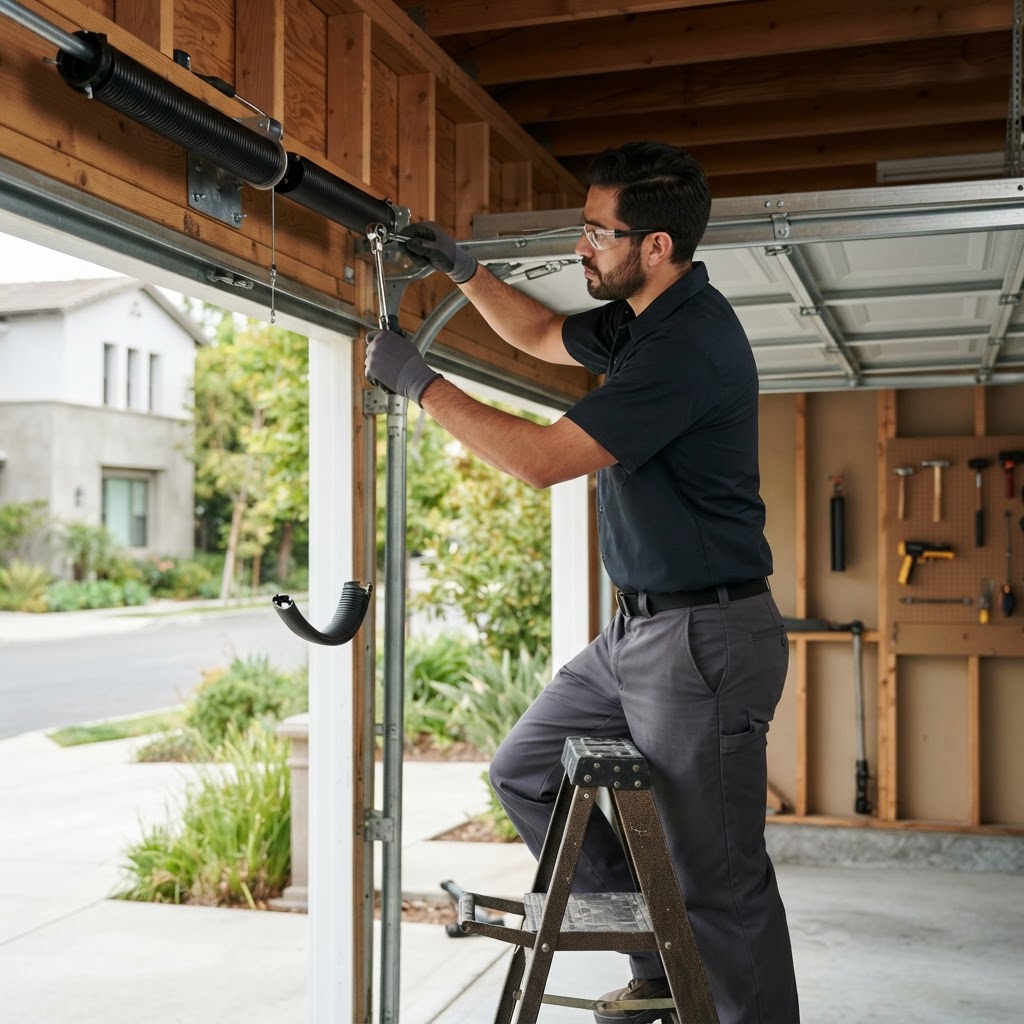
Simple maintenance and inspection tasks fall squarely in the DIY category for most homeowners. Tightening loose hardware, lubricating moving parts, testing door balance, and checking for obvious wear or damage require only basic tools and can be performed safely by anyone with moderate mechanical aptitude. Installing reinforcement struts on door panels is also achievable for experienced DIYers, provided you have the correct struts for your door type and follow manufacturer instructions carefully. These tasks improve your door's earthquake resistance without requiring specialized skills or creating significant safety risks if performed incorrectly.
However, many critical seismic retrofitting tasks venture into professional territory. Any work involving the spring system, including adjustments, repairs, or replacements, should be left to trained technicians. Garage door springs store tremendous energy under tension, and improper handling can cause severe injury or death. The winding bars, special tools, and techniques required for safe spring work are not typically available to homeowners, and the consequences of mistakes are simply too severe to justify DIY attempts regardless of your general mechanical skills.
Tasks That Require Professional Expertise
Installing lateral bracing systems often requires professional assessment and installation, particularly in homes where the garage structure itself needs reinforcement. While the concept of lateral bracing is straightforward, proper implementation requires understanding load paths, structural capacities, and connection details that go beyond typical homeowner knowledge. Professional installers can identify whether your garage walls and ceiling have adequate strength to support bracing loads or whether additional structural work is needed first.
Comprehensive safety inspections provide value that DIY assessments cannot match. Professional technicians have seen thousands of garage doors in various conditions and can identify subtle problems that homeowners typically miss. They understand how different components interact and can predict which issues will worsen during an earthquake. Professional inspections also typically include adjustments and minor repairs that bring your door system into optimal condition, not just identifying problems but actually correcting them during the service visit.
Replacing major components like tracks, cables, or the entire door assembly requires professional service for both safety and performance reasons. These components must be precisely sized, properly installed, and correctly adjusted to function reliably. Tracks must be perfectly aligned and plumb, cables must be wound onto drums with the correct tension and positioning, and doors must be balanced within tight tolerances. Professional installers have the measuring tools, installation jigs, and adjustment techniques to ensure everything works correctly, and they stand behind their work with service guarantees that DIY installations cannot provide.
Code Compliance and Permitting Considerations
Many seismic retrofitting projects in Los Angeles require building permits and must comply with current California building codes. Professional garage door companies understand these requirements and handle the permitting process as part of their service. They know which modifications trigger permit requirements, what documentation is needed, and how to ensure work meets inspection standards. Attempting DIY seismic retrofitting without proper permits can create problems when you sell your home or file insurance claims after earthquake damage.
Code compliance goes beyond just obtaining permits. California's building codes incorporate specific requirements for garage door installations in seismic zones, including minimum hardware specifications, installation methods, and testing procedures. Professional installers stay current with these evolving standards and apply them to every installation. DIY work, even when well-intentioned and carefully executed, may not meet current code requirements if you're working from outdated information or generic instructions not specific to California's seismic zones.
Insurance considerations also favor professional installation for major seismic retrofitting projects. Many insurance policies include provisions regarding earthquake damage and may have different coverage terms for professionally installed versus DIY seismic improvements. Some insurers offer premium discounts for homes with documented professional seismic retrofitting, potentially offsetting some of the installation expense over time. Professional installations include documentation that clearly demonstrates what work was performed and that it meets applicable standards, which can be valuable for both insurance and resale purposes.
Making the Right Choice for Your Situation
Assess your garage door's current condition and your earthquake preparedness goals realistically. If your door is relatively new, in good condition, and already includes some seismic features like reinforcement struts, adding lateral bracing and upgrading hardware might be achievable DIY projects. However, if your door is older, shows signs of wear, or lacks any seismic features, comprehensive professional retrofitting is the better choice. Trying to upgrade a worn-out door system with DIY seismic improvements often results in money spent on reinforcing components that should actually be replaced.
Consider the total project scope when deciding between DIY and professional service. Installing reinforcement struts alone might cost a few hundred dollars in materials and a weekend of your time. However, if you need struts, lateral bracing, track upgrades, spring replacement, and hardware reinforcement, the project becomes significantly more complex and time-consuming. Professional services can often complete comprehensive retrofitting in a single day, and the total investment may be more reasonable than you expect when you factor in your time, tool purchases, and the peace of mind that comes with professional installation.
Your personal safety and that of your family should be the deciding factor for any questionable situations. If you have any doubts about your ability to safely complete a seismic retrofitting task, or if the project involves components you don't fully understand, professional service is the right choice. Garage doors are the largest moving objects in most homes, and the forces involved in their operation are substantial. Mistakes during installation or adjustment can create immediate safety hazards or hidden problems that manifest during an earthquake when you most need your door system to function reliably.
When to Call a Professional: Contact MSB Garage Door Repair if your door shows signs of spring wear or damage, if tracks are bent or misaligned, if you're unsure about your garage structure's ability to support lateral bracing, if your door is more than 15 years old and has never been upgraded for seismic resistance, or if you want comprehensive retrofitting with documentation for insurance and resale purposes. Professional assessment is always appropriate when you're uncertain about any aspect of your garage door's earthquake readiness.
Protect Your Home and Family with Professional Earthquake-Proofing
Living in Los Angeles means accepting earthquake risk as part of daily life, but it doesn't mean leaving your home and family vulnerable to preventable garage door failures. The seismic retrofitting strategies and inspection procedures outlined in this guide provide a comprehensive approach to earthquake-proof garage door Los Angeles preparation that addresses the unique challenges Southern California homeowners face. From understanding how seismic forces affect garage door systems to implementing proper reinforcement and bracing, each step contributes to a safer, more resilient home.
Remember that earthquake preparedness is not a one-time project but an ongoing commitment. Regular inspections, timely maintenance, and prompt repairs keep your garage door system functioning optimally and ready to withstand seismic activity whenever it occurs. The relatively modest investment in proper seismic retrofitting provides enormous returns in safety, property protection, and peace of mind. When the next earthquake strikes, you'll be grateful you took action to protect what matters most.
Don't wait until after disaster strikes to address your garage door's earthquake vulnerabilities. MSB Garage Door Repair specializes in comprehensive seismic retrofitting for Los Angeles area homes, providing expert assessment, professional installation, and reliable service that meets California's stringent seismic standards. Our experienced technicians understand the unique challenges of Southern California garage doors and can recommend the most effective earthquake-proofing solutions for your specific situation.
Contact MSB Garage Door Repair today at (818) 650-7697 to schedule a comprehensive seismic safety inspection and receive a detailed assessment of your garage door's earthquake readiness. Our team serves all of Los Angeles and surrounding communities with professional seismic retrofitting services that protect your home and family. Don't leave your safety to chance - book your seismic inspection now and gain the peace of mind that comes with knowing your garage door is prepared for the next earthquake.
Related articles


Need professional garage door service?
Repairs, replacements and maintenance across Los Angeles and the San Fernando Valley. Same-day service and free written estimates.