
When DIY Garage Door Repairs Turn Dangerous: Warning Signs
Discover the critical warning signs that your DIY garage door repair has become dangerous. Learn which repairs risk serious injury and when to call Los Angeles professionals.

The Hidden Dangers of Garage Door DIY Projects
Every year, dangerous garage door DIY repairs send thousands of homeowners to emergency rooms across the country, and Los Angeles is no exception. What starts as a simple weekend project to save money can quickly escalate into a life-threatening situation. Garage doors are the largest moving objects in most homes, with components under extreme tension that can cause severe injuries or even death when handled improperly.
The appeal of DIY garage door repairs is understandable. Los Angeles homeowners are resourceful, and online tutorials make complex repairs seem deceptively simple. However, garage doors involve a dangerous combination of high-tension springs, heavy panels weighing hundreds of pounds, electrical systems, and intricate mechanical components. A single mistake during a DIY repair can result in crushed fingers, broken bones, head trauma, or worse.
According to the U.S. Consumer Product Safety Commission, approximately 20,000 people suffer garage door-related injuries annually, with many of these incidents occurring during amateur repair attempts. In Southern California, where garage doors are used multiple times daily and exposed to unique environmental stressors, the risks are compounded. Understanding when a DIY project crosses the line from manageable maintenance to dangerous territory can literally save your life.
This comprehensive guide will help you recognize the warning signs that your garage door repair has become unsafe, identify which repairs should never be attempted without professional help, and understand the real-world consequences of dangerous garage door DIY repairs in the Los Angeles area.
Five Critical Warning Signs Your DIY Repair Is Becoming Unsafe
1. Torsion Spring Tension and Visible Spring Damage
Torsion springs are the most dangerous components in any garage door system. These tightly wound metal coils store tremendous energy, with standard residential springs holding between 200 and 400 pounds of tension. When a torsion spring breaks or is improperly handled, it can release this energy instantaneously, turning the spring bar and associated hardware into deadly projectiles.
If you notice your garage door spring showing signs of wear such as gaps between coils, visible rust, or elongation, this is a critical warning sign to stop any DIY repair immediately. Even more dangerous is attempting to adjust or replace these springs yourself. The winding process requires specialized tools and precise knowledge of spring mechanics. One wrong turn of the winding bar can cause the spring to snap, sending the metal bar flying with enough force to cause severe injury or death.
Los Angeles homeowners should be particularly aware that the region's temperature fluctuations and humidity levels from coastal areas can accelerate spring deterioration. A spring that appears intact may be weakened internally and ready to fail. Professional technicians use specific safety equipment and procedures to handle these components, including proper winding cone engagement, controlled tension release, and secure mounting techniques that prevent catastrophic failure.
Pro Tip: Never attempt to remove, adjust, or replace torsion springs yourself. These components are responsible for more DIY garage door injuries than any other part. If you see a broken spring, keep the door closed and contact professionals immediately. Our Spring Replacement service includes safety inspections of all related components to prevent future failures.
2. Electrical Issues and Opener Malfunctions
Modern garage door openers involve complex electrical systems that combine high-voltage power supplies, sensitive electronic circuit boards, safety sensors, and radio frequency receivers. When your opener starts showing signs of electrical problems such as burning smells, sparking, inconsistent operation, or complete failure, continuing to troubleshoot yourself poses serious risks.
Electrical hazards in garage door systems are particularly dangerous because they often involve both standard household current and low-voltage control circuits. Homeowners may inadvertently create short circuits, damage safety systems, or expose themselves to electrical shock. In Los Angeles homes with older electrical systems or those that have experienced power surges during storms, the risks are amplified.
Beyond the immediate shock hazard, improperly repaired electrical components can create fire risks. Loose connections, incorrect wire gauges, or bypassed safety features can cause overheating and electrical fires. Additionally, disabling or incorrectly wiring safety sensors removes critical protections designed to prevent the door from closing on people, pets, or vehicles.
Warning signs that electrical work has become dangerous include repeated circuit breaker trips, visible wire damage, burnt components, or the need to bypass safety features to make the opener work. These symptoms indicate problems that require professional diagnosis and repair with proper electrical testing equipment and knowledge of garage door-specific electrical codes.
3. Structural Damage to Tracks, Rollers, or Door Panels
When your garage door goes off track or you notice bent tracks, damaged rollers, or cracked panels, the structural integrity of the entire system is compromised. Attempting to force a door back on track or straighten bent components yourself can lead to sudden and violent door collapse. A standard two-car garage door weighs between 150 and 400 pounds, and when that weight shifts unexpectedly, it can cause crushing injuries.
Structural repairs require understanding how all components work together to safely support and guide the door. Tracks must be precisely aligned and securely mounted to handle the lateral forces during operation. Rollers need proper bearing function and secure attachment to door sections. Any misalignment or weakened connection creates instability that can result in catastrophic failure.
In Southern California, where homes may have experienced seismic activity, structural damage to garage door systems is more common than many homeowners realize. Even minor earthquakes can shift track mounting points or stress door panel connections. What appears to be a simple bent track may actually indicate compromised wall mounting or hidden structural damage requiring professional assessment.
If you notice your door operating unevenly, binding during movement, or making unusual scraping sounds, these are indicators of structural problems. Attempting to force the door to operate or manually bend tracks back into position can worsen the damage and create immediate safety hazards. Professional repair includes proper measurement, alignment verification, and load testing to ensure safe operation.
4. Cable Fraying, Breaking, or Coming Off Drums
Garage door cables work in conjunction with springs to safely control door movement. These braided steel cables are under constant tension and can snap with devastating results. When a cable breaks or comes off its drum, the door loses balanced support and can crash down on one side, potentially trapping or crushing anyone nearby.
If you notice frayed cables, cables that have come loose from their mounting points, or cables wrapped incorrectly around drums, this is a clear sign that DIY repair has entered dangerous territory. Cable systems require precise tension adjustment, proper drum alignment, and secure bottom bracket attachment. Attempting to rewind cables onto drums or adjust tension without understanding the entire spring and cable relationship can result in sudden spring release or cable whipping.
The danger is particularly acute because cables often fail during door operation. A cable that appears intact may have internal strand breakage that leads to sudden failure when the door is in motion. In Los Angeles garages where doors are used frequently and exposed to dust and temperature variations, cable wear accelerates. Regular professional inspection can identify cable deterioration before failure occurs, but once cables show visible damage, only trained technicians should handle repairs.
Warning signs include cables with visible wire strand breakage, cables hanging loose, uneven door operation, or cables that appear to have different tension on each side. Our Cable Repair service addresses these issues with proper tension balancing and safety verification to prevent door collapse.
5. Door Balance Problems and Spring Adjustment Needs
A properly balanced garage door should stay in place when manually opened halfway. If your door falls rapidly, rises on its own, or requires significant force to lift manually, the spring tension is incorrect. While this might seem like a simple adjustment issue, attempting to rebalance a garage door yourself involves directly manipulating high-tension springs, which is one of the most dangerous garage door DIY repairs possible.
Spring adjustment requires precise quarter-turn increments using winding bars properly seated in winding cones. Each adjustment changes the tension by approximately 20 to 30 pounds. Incorrect adjustment can make the door too heavy for the opener motor, causing premature motor failure, or too light, creating a door that opens unexpectedly and violently. More critically, improper winding bar technique can result in the bar slipping and striking the person making the adjustment.
Los Angeles homeowners should understand that door balance changes over time as springs lose tension through normal wear cycles. A door that was properly balanced during installation will gradually become heavier as springs weaken. This is normal wear, not a DIY adjustment opportunity. Professional technicians have the tools, training, and experience to safely adjust spring tension or recommend spring replacement when adjustment is no longer sufficient.
If you've attempted to adjust your garage door and notice it still doesn't balance properly, or if you feel uncomfortable with the tension forces involved, stop immediately. Continuing to manipulate spring tension without proper knowledge can lead to spring failure, door collapse, or personal injury. Professional balance adjustment includes verification of spring cycle life, proper tension calculation based on door weight, and safety testing of all related components.
Real Los Angeles Garage Door Injury Statistics and Case Studies
National and Local Injury Data
The statistics surrounding garage door injuries paint a sobering picture of the risks involved in DIY repairs. According to the U.S. Consumer Product Safety Commission, garage doors and their components cause approximately 20,000 injuries annually requiring emergency room treatment. Of these injuries, a significant percentage involve homeowners attempting repairs or adjustments without proper training or equipment.
Injury types range from crushed fingers and hands caught between door sections or in closing mechanisms, to severe head trauma from falling doors or flying components. Torsion spring-related injuries are among the most severe, often involving broken bones, deep lacerations, and in tragic cases, fatalities. The force involved in spring failures can exceed 400 pounds released instantaneously, creating impact forces comparable to serious vehicle accidents.
In Southern California specifically, emergency rooms in Los Angeles, Glendale, Burbank, and surrounding areas treat dozens of garage door-related injuries each year. Local trauma centers report cases involving homeowners struck by winding bars during spring replacement attempts, individuals crushed under falling doors when cable systems failed during DIY repairs, and electrical shock injuries from improper opener installation or repair.
The demographic data reveals that these injuries don't discriminate. Experienced DIY enthusiasts and novice homeowners alike suffer serious injuries when attempting dangerous garage door repairs. The common factor is not lack of general handyman skills, but rather the specialized knowledge and equipment required for safe garage door repair work.
Common Injury Scenarios in DIY Garage Door Repairs
Understanding how injuries occur can help Los Angeles homeowners recognize when they're approaching dangerous situations. The most common injury scenario involves torsion spring replacement or adjustment. Homeowners watch online tutorials that make the process appear straightforward, but fail to communicate the extreme forces involved or the consequences of winding bar slippage. When the winding bar slips from the winding cone during tension adjustment, it spins with tremendous force, striking the person holding it or nearby individuals.
Another frequent injury pattern involves door collapse during cable repair or replacement. When homeowners disconnect cables without properly securing the door or understanding how spring tension transfers through the cable system, the door can fall suddenly. The weight of a garage door, combined with any remaining spring tension, creates crushing force sufficient to cause severe injuries to hands, feet, or any body part underneath the door.
Finger and hand injuries represent a large category of garage door DIY accidents. These occur when homeowners place hands between door sections while operating the door, attempt to manually force doors that are binding or off track, or get fingers caught in roller brackets during panel replacement. The pinch points in garage door systems can generate thousands of pounds of force, resulting in crushed fingers, amputations, and permanent disability.
Electrical injuries, while less common than mechanical injuries, still represent a serious risk category. Homeowners attempting to install or repair garage door openers may inadvertently contact live electrical connections, create short circuits that cause burns, or disable safety features that later result in entrapment injuries. In Los Angeles homes with older electrical systems, the risks are compounded by outdated wiring that may not meet current electrical codes.
The True Cost of DIY Garage Door Injuries
Beyond the immediate physical trauma, garage door injuries carry substantial long-term consequences. Medical treatment for serious garage door injuries can require emergency surgery, extended hospitalization, physical therapy, and in severe cases, permanent disability accommodations. Crushed hands may never regain full function, affecting career capabilities and quality of life. Head trauma can result in cognitive impairments requiring ongoing care.
Property damage often accompanies DIY repair injuries. When springs fail catastrophically or doors collapse, they can damage vehicles parked in the garage, destroy stored belongings, and cause structural damage to the garage itself. In Los Angeles, where garage space is at a premium and often houses valuable vehicles and equipment, the property damage from failed DIY repairs can be substantial.
The emotional and psychological impact on families should not be underestimated. Witnessing a family member suffer a serious injury during a home repair project creates lasting trauma. Children who see a parent injured by a garage door may develop anxiety about garage door operation. The guilt and stress associated with a preventable injury can strain relationships and create lasting emotional consequences.
Professional garage door repair eliminates these risks entirely. While homeowners may initially view professional service as an expense, the investment in safety and proper repair far outweighs the potential costs of injury, property damage, and long-term consequences of dangerous garage door DIY repairs gone wrong.
Which Repairs Are Too Dangerous for DIY
Torsion Spring Replacement and Adjustment
Torsion spring work tops the list of repairs that should never be attempted without professional training and equipment. The process involves unwinding springs under extreme tension, removing them from the spring bar, installing new springs with precise measurements, and winding them to exact specifications. Each step presents serious injury risks that require specialized knowledge to mitigate.
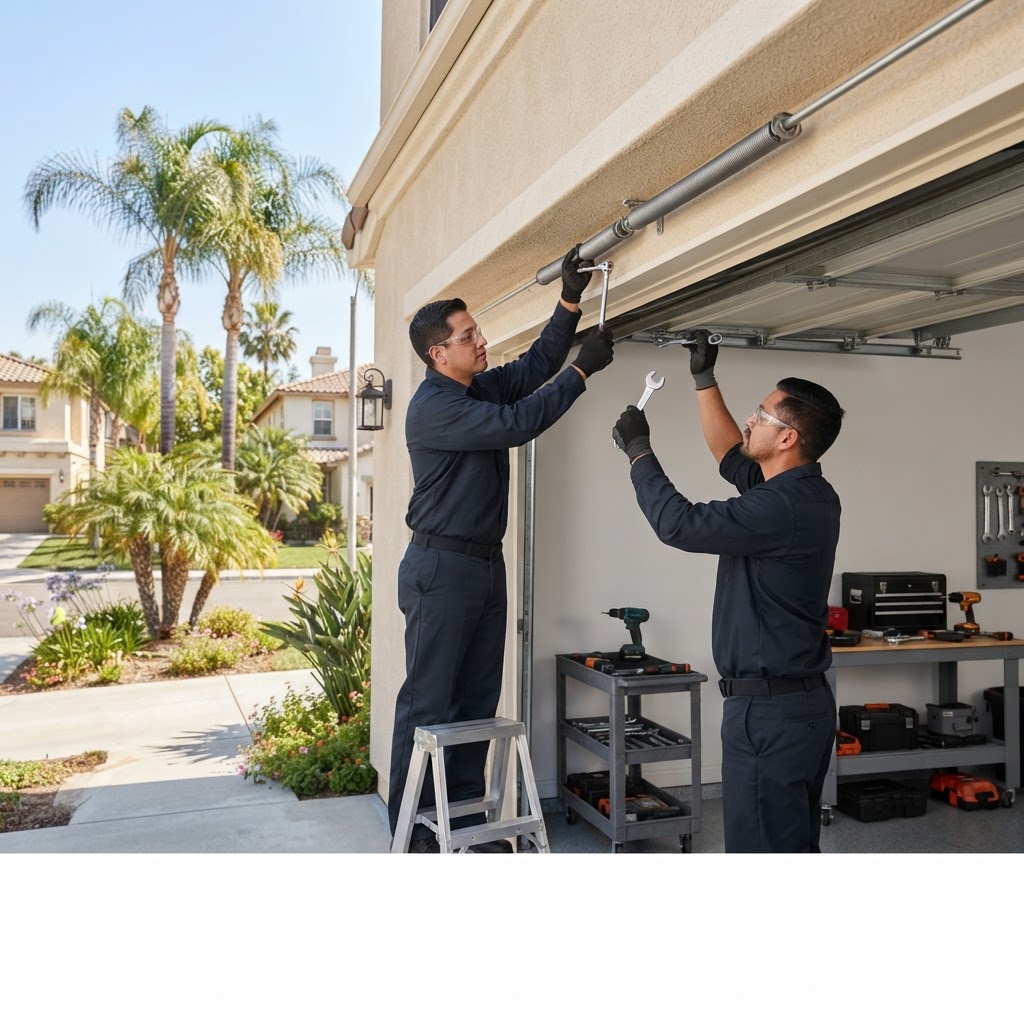
Professional spring replacement begins with proper safety equipment including safety glasses, gloves, and in some cases, protective shields. Technicians use commercial-grade winding bars specifically designed for the task, not screwdrivers or improvised tools that can slip from winding cones. The winding process follows specific protocols including proper cone engagement verification, controlled quarter-turn increments, and constant awareness of bar position and tension forces.
Beyond the mechanical process, professionals understand spring selection based on door weight, height, and cycle requirements. Using incorrect springs creates immediate safety hazards and premature failure. Los Angeles homes have diverse garage door configurations from standard single-car doors to custom oversized doors, each requiring specific spring calculations. Our Spring Replacement service includes precise measurements and appropriate spring selection for your specific door system.
Extension spring systems, while somewhat less dangerous than torsion springs, still present significant risks. These springs stretch along the horizontal tracks and are under constant tension when the door is closed. Replacement requires understanding proper cable routing, safety cable installation, and tension adjustment. Even extension spring work should be left to professionals who can ensure proper installation and safety cable protection.
Cable System Repairs and Replacements
Garage door cable repairs involve components that work directly with spring systems, making them inherently dangerous. Cables are under constant tension from the springs, and any attempt to disconnect, adjust, or replace cables requires managing this tension safely. When cables break or come off drums, the door loses balanced support and can collapse unexpectedly.
Professional cable repair requires understanding the relationship between springs, drums, and cables. Technicians must safely release spring tension, remove damaged cables, install new cables with proper routing through pulleys and around drums, and restore correct tension. The process demands specific tools including proper winding bars, cable installation tools, and measurement devices to ensure even tension on both sides of the door.
In Los Angeles homes, cable damage often results from corrosion due to coastal humidity, debris accumulation in track systems, or wear from frequent daily use. When cables show fraying or strand breakage, they're at risk of sudden failure. Attempting to temporarily repair or adjust damaged cables creates immediate danger, as the remaining cable strands may not support the door weight, leading to collapse during the repair attempt.
Bottom bracket work, where cables attach to the door, presents particular danger. These brackets are under direct spring tension, and removing the bolts that secure them can cause the bracket to violently release, striking the person performing the repair. Professional technicians use specific procedures to safely secure doors and release tension before working on bottom brackets, eliminating the risk of sudden release.
Garage Door Opener Electrical Work and Installation
While opener installation might seem straightforward compared to spring work, it involves electrical connections, precise alignment, and safety sensor configuration that can create hazards when performed incorrectly. Garage door openers operate on standard household current, typically 120 volts, which poses electrocution risks during installation or repair. Beyond the electrical hazards, improper installation can create mechanical dangers including door reversal failure and entrapment risks.
Professional opener installation includes proper electrical connection with appropriate circuit protection, secure mounting to structural members capable of supporting the opener weight and operational forces, precise rail alignment to prevent binding and excessive wear, and thorough safety sensor installation and testing. Each element requires specific knowledge and tools to ensure safe operation.
Safety sensor alignment is particularly critical and frequently performed incorrectly during DIY installations. These sensors must be precisely aligned, properly wired, and tested under various conditions to ensure they'll prevent door closure when obstructions are present. Misaligned or improperly installed sensors create false confidence that the safety system is functional when it may fail to detect children, pets, or objects in the door path.
Los Angeles building codes and safety regulations require specific safety features on garage door openers. Professional installation ensures compliance with these requirements, including proper emergency release function, force adjustment within safe parameters, and backup safety systems. Our Opener Repair service includes comprehensive safety testing to verify all protective features function correctly.
Structural Repairs Including Track Alignment and Panel Replacement
Track alignment and panel replacement involve working with the full weight and structural integrity of the garage door system. Tracks must be precisely parallel, properly spaced, and securely mounted to wall studs or reinforced mounting points. Any misalignment creates binding, uneven wear, and potential door collapse. Attempting to adjust tracks while the door is installed and under spring tension creates serious injury risks.
Professional track repair begins with proper door support to eliminate spring tension effects. Technicians use specialized measurement tools to verify parallel alignment, proper spacing, and correct curve radius for smooth operation. Track mounting must account for structural support capacity, with reinforcement added when necessary. In Los Angeles homes, particularly older construction, wall mounting points may not provide adequate support without reinforcement.
Panel replacement presents unique challenges because it requires disconnecting the panel from the spring and cable system while maintaining door stability. Damaged panels affect door weight distribution and balance, requiring spring adjustment after replacement. Attempting panel replacement without proper support equipment can result in door collapse, crushing injuries, or damage to remaining panels and hardware.
Weather damage, vehicle impacts, and age-related deterioration are common causes of panel damage in Southern California. When panels are dented, cracked, or showing structural failure, professional assessment is essential to determine whether panel replacement is sufficient or if the entire door requires replacement. This evaluation requires understanding structural engineering principles and garage door system integration that goes beyond typical DIY capabilities.
Safe DIY Tasks vs. When to Call MSB Garage Door Repair Immediately
Maintenance Tasks Homeowners Can Safely Perform
While many garage door repairs are too dangerous for DIY attempts, there are routine maintenance tasks that Los Angeles homeowners can safely perform to keep their garage doors operating smoothly and identify potential problems before they become emergencies. These tasks don't involve working with springs under tension, electrical systems, or structural components, making them appropriate for careful homeowners.
Visual inspections should be performed monthly and involve examining all visible components for wear, damage, or unusual conditions. Look for frayed cables without touching or adjusting them, check for loose hardware such as bolts and brackets, observe roller condition for wear or damage, and note any unusual sounds during operation. Document your observations and report concerning findings to professionals rather than attempting repairs.
Lubrication is a safe and beneficial maintenance task when performed correctly. Use garage door-specific lubricant, not general-purpose oils or greases that can attract dirt and cause premature wear. Apply lubricant to roller bearings, hinges between door sections, and the spring (exterior only, never attempt to lubricate internal spring mechanisms). Avoid over-lubricating, which creates drips and attracts debris. Our Tune-Up service includes professional lubrication with appropriate products for Los Angeles climate conditions.
Cleaning tracks and removing debris is another safe maintenance task. Use a damp cloth to wipe track interiors, removing accumulated dirt, spider webs, and debris that can interfere with roller operation. Never use lubricants inside tracks, as rollers should roll freely without slipping. Check that tracks are clear of obstructions and that rollers move smoothly along the track length without binding.
Testing safety features is essential monthly maintenance that homeowners can perform safely. Test the door reversal mechanism by placing a solid object like a wooden block in the door path and closing the door. The door should reverse immediately upon contact. Test photo-eye sensors by breaking the beam while the door is closing; the door should reverse. If either test fails, contact professionals immediately and discontinue door use until repairs are completed. Learn more about proper testing procedures in our guide on How to Test Garage Door Safety Features.
Warning Signs That Require Immediate Professional Attention
Recognizing warning signs that indicate professional service is needed can prevent dangerous situations from developing. These symptoms suggest problems with components under tension, structural integrity, or safety systems that should never be addressed through DIY repairs. Understanding these warning signs helps Los Angeles homeowners make informed decisions about when to stop DIY attempts and call professionals.
Broken or visibly damaged springs are the most critical warning sign requiring immediate professional attention. If you hear a loud bang from your garage, find your door suddenly won't open or is extremely heavy to lift manually, or see a visible gap in a torsion spring, do not attempt to operate the door. Keep it closed and contact professionals immediately. Operating a door with a broken spring can cause cable failure, door collapse, and serious injury.
Unusual sounds during operation indicate mechanical problems that require professional diagnosis. Grinding, scraping, or squealing sounds suggest roller bearing failure, track misalignment, or other mechanical issues. Popping or snapping sounds may indicate spring or cable problems. Loud banging during operation can signal broken or loose hardware. While these sounds might seem minor, they often precede catastrophic failures that can cause injury or extensive property damage.
Uneven door movement or visible sagging on one side indicates cable, spring, or structural problems requiring immediate professional attention. This symptom suggests the door is no longer properly balanced or supported, creating collapse risks. Never attempt to operate a door showing uneven movement, and don't try to manually force it to operate smoothly. Professional evaluation can identify the root cause and implement proper repairs safely.
Electrical problems including burning smells, sparking, or opener malfunctions require immediate professional service. These symptoms can indicate fire hazards or safety system failures. Disconnect power to the opener and contact professionals rather than attempting electrical troubleshooting. In Los Angeles homes with older electrical systems, opener electrical problems may indicate broader electrical issues requiring licensed electrician involvement in addition to garage door service.
How to Safely Secure a Malfunctioning Garage Door
When your garage door develops problems requiring professional repair, knowing how to safely secure it until service arrives is essential. These procedures help prevent injury, protect property, and avoid worsening the damage. Los Angeles homeowners should understand these safety protocols as part of responsible garage door ownership.
If the door is in the closed position and won't open, leave it closed and use alternative entry to your home. Don't attempt to manually force the door open or disconnect the opener to manually operate the door unless you've been trained in emergency release procedures. A door with spring or cable failure can collapse suddenly when the opener is disconnected, causing severe injury. Secure the door by ensuring no one attempts to operate it and post clear warnings if necessary.
If the door is stuck in the open position, securing it requires careful consideration of the specific situation. If the door appears stable and is fully open, you can generally leave it in this position until professionals arrive. However, if the door is partially open, unstable, or showing signs of imminent failure, evacuate vehicles and valuables from the garage and restrict access to the area. Never attempt to prop up or support a failing door with makeshift supports that could collapse.
For doors that have come off track or show structural damage, the priority is preventing further damage and ensuring no one is injured by unexpected door movement. Keep people and pets away from the door, secure the area to prevent accidental contact, and avoid any attempts to operate or manually move the door. Even doors that appear stable can shift suddenly when structural integrity is compromised.
Emergency situations requiring immediate professional response include doors that have collapsed or partially collapsed, doors with broken springs that are stuck in any position with vehicles or people potentially trapped, visible structural damage that poses imminent collapse risk, and any situation where someone has been injured by the garage door. Our Emergency Repairs service provides rapid response for these critical situations throughout the Los Angeles area.
The Value of Professional Safety Inspections
Regular professional safety inspections represent the most effective strategy for preventing dangerous situations that might tempt DIY repairs. These comprehensive evaluations identify potential problems before they become emergencies, verify safety system function, and provide homeowners with clear information about their garage door's condition and any needed repairs.
Professional safety inspections examine every component of your garage door system using specialized tools and trained observation. Technicians check spring condition and cycle life, cable wear and proper tension, track alignment and mounting security, roller bearing condition and proper operation, hardware tightness and integrity, opener function and safety features, and door balance and smooth operation. This thorough evaluation identifies problems invisible to untrained observers.
In Los Angeles, where garage doors face unique environmental stresses including temperature variations, coastal humidity in areas like Santa Monica and Marina del Rey, seismic activity risks, and frequent daily use, professional inspections should be performed annually at minimum. Homes in areas with particularly challenging conditions may benefit from semi-annual inspections to catch accelerated wear before failures occur.
Safety inspections provide documentation of your garage door's condition, creating a maintenance record that helps identify patterns of wear and predict component lifecycle. This information enables proactive replacement of worn components before they fail, preventing emergency situations and the temptation to attempt dangerous DIY repairs. Our Safety Inspections service includes comprehensive evaluation and detailed reporting of findings with clear recommendations for any needed service.
The relationship between regular professional maintenance and DIY safety cannot be overstated. Homeowners who maintain regular professional service relationships are less likely to encounter emergency situations requiring immediate repair. When problems do arise, they have established professional resources to call rather than feeling compelled to attempt dangerous repairs themselves. This proactive approach to garage door maintenance protects families, property, and peace of mind.
Protecting Your Family and Property in Los Angeles
The decision to attempt garage door repairs yourself should never be taken lightly. While the DIY approach works well for many home maintenance tasks, garage doors present unique dangers that have resulted in thousands of serious injuries and numerous fatalities nationwide. Understanding the difference between safe maintenance and dangerous garage door DIY repairs is essential for every Los Angeles homeowner.
The warning signs discussed throughout this guide provide clear indicators of when DIY efforts have crossed into dangerous territory. Torsion spring issues, electrical problems, structural damage, cable failures, and balance problems all require professional expertise, specialized tools, and safety equipment that typical homeowners don't possess. Recognizing these warning signs and immediately stopping DIY attempts can literally save your life or prevent life-altering injuries.
Real injury statistics and case studies from Los Angeles and across the country demonstrate that garage door DIY dangers are not theoretical risks but actual consequences that affect real families. The medical, financial, and emotional costs of garage door injuries far exceed any potential savings from DIY repairs. Professional service provides not just technical expertise but also insurance protection, proper safety equipment, and accountability that DIY repairs cannot offer.
Certain repairs including spring replacement, cable work, opener electrical installation, and structural repairs should never be attempted without professional training. These tasks involve forces, electrical hazards, and mechanical complexities that require specialized knowledge to handle safely. The small subset of maintenance tasks appropriate for homeowners such as visual inspections, basic cleaning, lubrication, and safety feature testing provide valuable contributions to garage door longevity without exposing you to serious injury risks.
Los Angeles homeowners have access to professional garage door services throughout the region, from Burbank to Santa Monica, eliminating any need to risk dangerous DIY repairs. Professional service provides peace of mind, proper repairs that last, comprehensive safety verification, and protection for your family and property. The investment in professional service is minimal compared to the potential costs of DIY injuries and the value of your safety.
Your garage door is an essential component of your home's security, convenience, and property value. It's also one of the most potentially dangerous mechanical systems in your home. Treating it with appropriate respect and knowing when to call professionals rather than attempting repairs yourself demonstrates wisdom and responsibility to your family. Don't let a DIY project become a tragedy. When warning signs appear, make the safe choice and contact experienced professionals.
Get Professional Garage Door Service Throughout Los Angeles
If you've recognized any of the warning signs discussed in this guide, or if you're facing a garage door problem that you're uncertain how to address safely, MSB Garage Door Repair is here to help. Our experienced technicians serve homeowners throughout Los Angeles and surrounding communities with professional service that prioritizes your safety above all else.
We handle all the dangerous repairs that should never be attempted as DIY projects, including spring replacement and adjustment, cable repair and installation, opener electrical work, track alignment and structural repairs, and complete system safety inspections. Our service eliminates the risks of dangerous garage door DIY repairs while ensuring your door operates safely and reliably for years to come.
Don't risk serious injury or property damage by attempting repairs beyond safe DIY maintenance. Contact MSB Garage Door Repair today at (818) 650-7697 or visit our online booking page to schedule service. We provide prompt, professional service throughout the Los Angeles area, from Glendale to Culver City and everywhere in between. Your safety is our priority, and we're committed to keeping your garage door operating safely and reliably. For comprehensive service information, visit our Garage Door Repair page to learn about our complete range of professional services.
Related articles


Need professional garage door service?
Repairs, replacements and maintenance across Los Angeles and the San Fernando Valley. Same-day service and free written estimates.