
Step-by-Step Guide to Garage Door Installation in Los Angeles
Planning a garage door installation in Los Angeles? Read our expert guide for DIY tips, safety warnings, and professional advice to secure your home today.
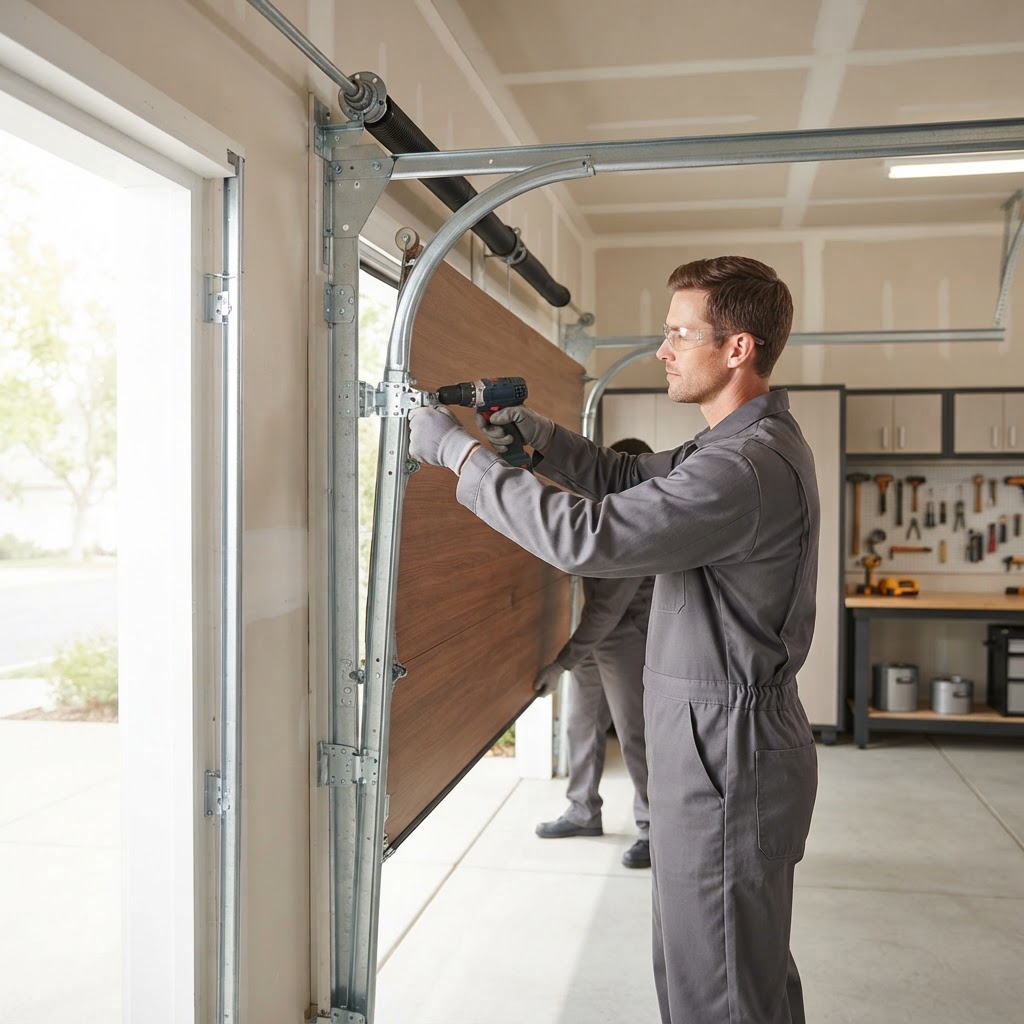
Step-by-Step Guide to Garage Door Installation in Los Angeles
Are you looking into Garage Door Installation in Los Angeles? You have come to the right place. Installing a new garage door is a significant home improvement project that can increase your property value, enhance home security, and boost your home's curb appeal. In a city like Los Angeles, where the climate ranges from intense coastal sun to dry heat, your garage door acts as a primary barrier. While some homeowners consider DIY options, understanding the technical complexity is vital. This comprehensive guide provides an authoritative look at the installation process, local requirements, and long-term care.
Understanding the Anatomy of Garage Doors
Before beginning an installation, you must understand the hardware. Los Angeles homes often feature diverse architectural styles, from Mid-Century Modern to Spanish Colonial, each requiring different door specifications.
Common Door Types and Material Selection
- Sectional Doors: The industry standard for LA residential homes. These move vertically and are built for durability.
- Roll-Up Doors: Primarily found in industrial or tight urban settings where ceiling space is at a premium.
- Swing-Out Carriage Doors: Popular in historic districts, these provide a classic aesthetic but require significant driveway clearance.
- Material Considerations: Steel is the most popular choice for LA residents because it resists warping under extreme temperature fluctuations. Aluminum is excellent for rust resistance in coastal zones like Santa Monica or Venice.
Preparation and Necessary Tools
A successful installation relies on 40 percent preparation and 60 percent execution. Before you start, ensure your workspace is cleared of all vehicles and debris.
Essential Equipment List
To perform this job correctly, you need professional-grade tools:
- Heavy duty power drill with a variety of impact-rated bits
- Adjustable wrenches and a full socket set (standard and metric)
- Four foot level to prevent alignment issues that lead to track friction
- High-tension safety glasses and industrial-grade, cut-resistant gloves
- Step ladder with a weight rating of at least 300 pounds
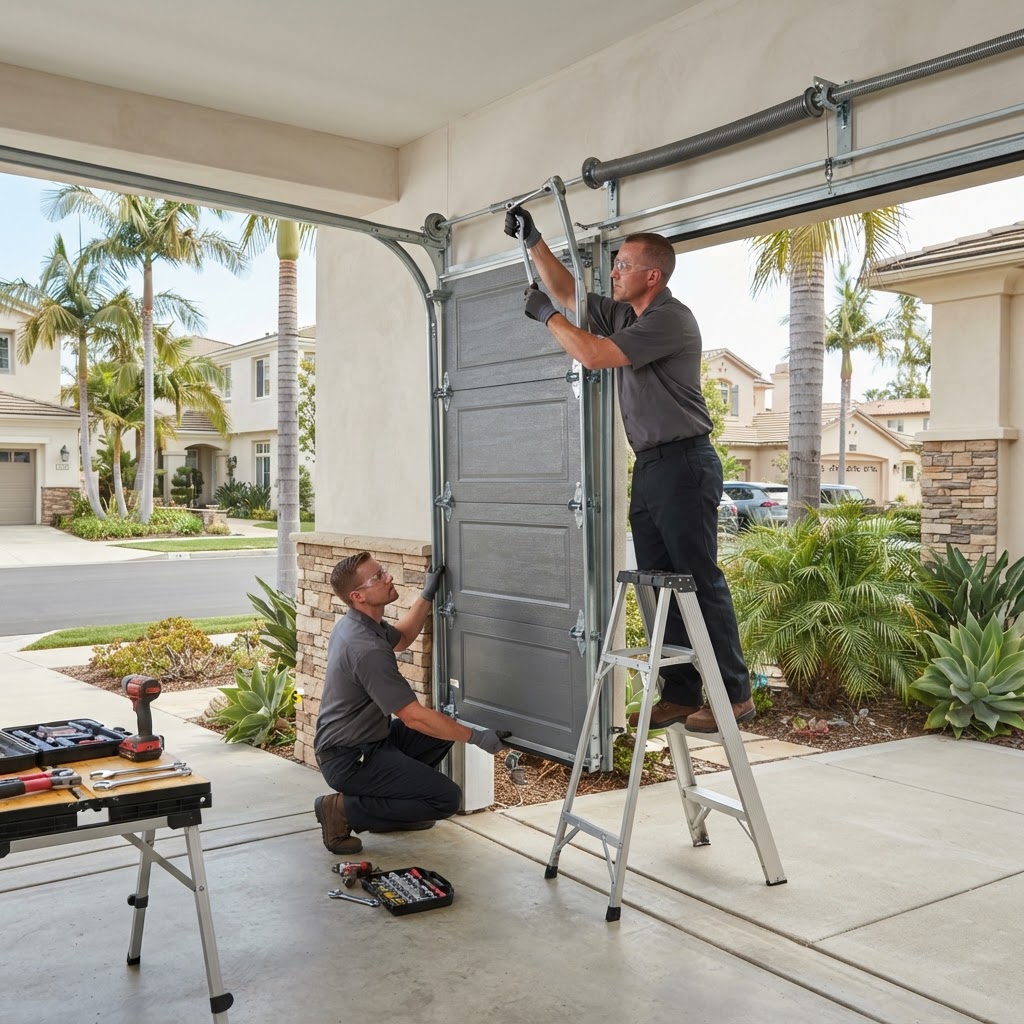
Pro Tip: Always enlist a professional assistant. The average residential garage door weighs between 100 and 300 pounds. Never attempt to lift panels alone, as a dropped panel can cause severe property damage or physical injury.
The Step-by-Step Installation Process
The installation of a garage door involves mechanical precision. Even a one-inch misalignment can cause the door to bind or ruin the motor gears.
- Preparation and Demolition: Remove the old door carefully. If your door has a torsion spring, you must safely release the tension before unbolting the assembly.
- Track Mounting: Install the vertical and horizontal tracks. In Los Angeles, you must secure these into structural studs or masonry. Use your level constantly; a one-degree tilt will cause the door to roll unevenly.
- Hanging Panels: Assemble the door from the bottom up. Ensure hinges are fastened securely using the manufacturer specified torque settings.
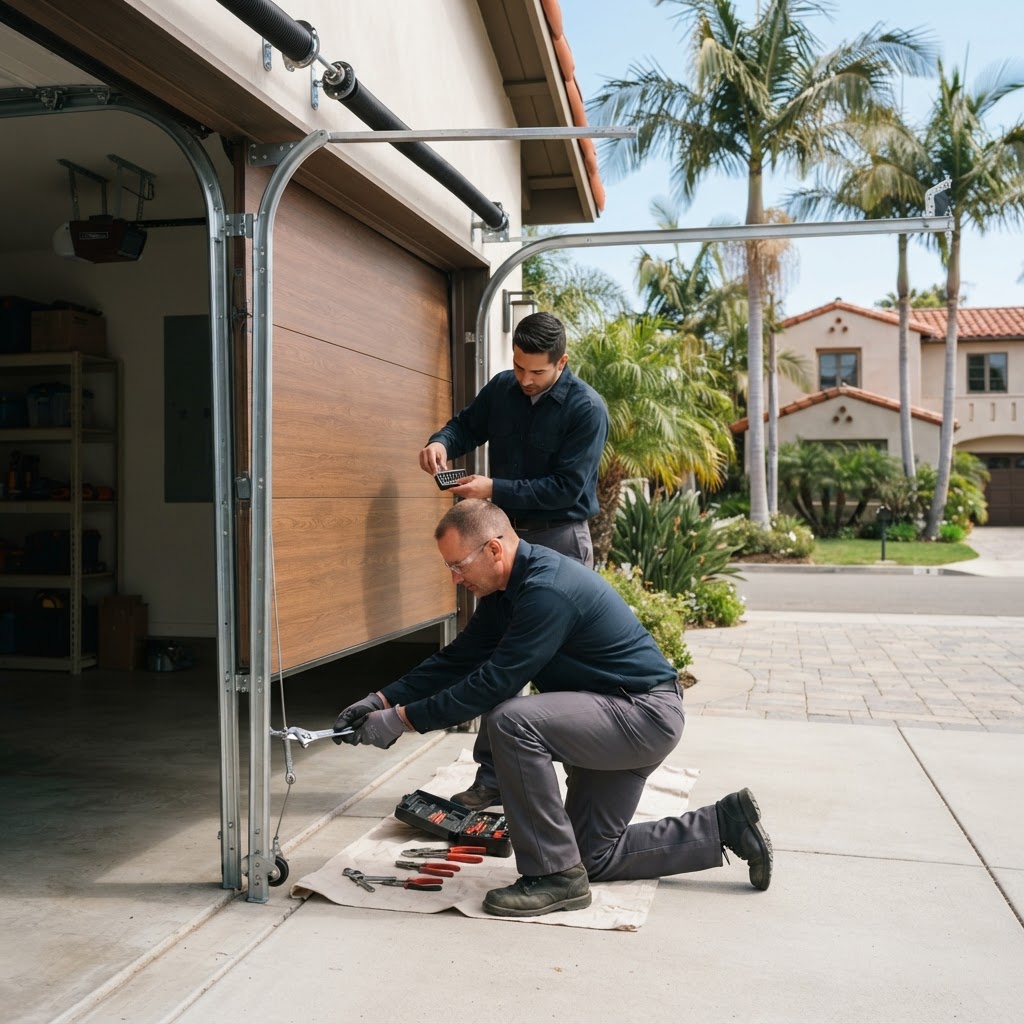
- Spring Tensioning: This is the most dangerous stage of the installation. Proper calibration is required to ensure the door is balanced; if you feel overwhelmed, seek Spring Replacement services immediately.
- Opener Integration: Mount the motor and connect the sensors. Most modern doors require an opener with advanced safety features. Visit our Opener Installation page for advice on current safety regulations.
- Final Alignment Testing: Check the door travel for smoothness. The auto-reverse safety feature must be tested by placing a small object in the door path to ensure it retracts instantly.
When to Call a Professional for Help
Garage door systems operate under extreme mechanical tension. At MSB Garage Door Repair, we often see DIY projects that result in broken cables or bent tracks due to improper initial setup. Call a professional if you encounter the following:
- The tension springs feel completely unmanageable or are already snapped.
- Your home is located in an area with specific wind-load requirements or high-moisture exposure.
- The tracks require shimming for uneven concrete floors.
- You are uncertain about electrical load requirements for smart garage openers.
Our technicians are experts in Garage Door Repair and can ensure your installation complies with all local building codes, keeping your warranty active and your home safe. We also provide routine Safety Inspections to identify wear before it becomes a failure.
Maintenance Tips for the Los Angeles Climate
California heat can dry out garage components quickly. Regular maintenance will extend the life of your investment by years.
- Lubrication: Use a silicone-based spray on rollers and hinges every six months. Never use heavy grease, as it attracts dirt and desert grit.
- Track Inspection: Wipe down tracks to remove spider webs and dust buildup.
- Visual Checks: Look for frayed cables or rust on the hardware. If you see signs of failure, do not wait for a complete breakdown; contact us for Emergency Repairs.
Are you ready to upgrade your home? For professional installation services in Los Angeles, call MSB Garage Door Repair at (818) 650-7697. You can also visit our Book a Service page to schedule an installation date that fits your busy calendar.
Navigating Los Angeles Building Codes and Regional Compliance
Installing a garage door in Los Angeles requires more than just mechanical skill. It requires adherence to specific municipal building codes and safety regulations. Los Angeles County often mandates that new installations meet strict wind load requirements and fire safety standards, particularly in designated fire hazard severity zones. If you reside in the hills or canyons, your garage door structure may need additional bracing to ensure it remains operable during high wind events. Before you commit to a specific model, verify whether your property falls under a Homeowners Association that dictates aesthetic requirements such as specific colors, window inserts, or materials. Failure to comply with these local regulations can lead to costly fines or the requirement to uninstall your brand new system entirely.
Diagnostic Signs Your Current Door Needs Replacement
Homeowners often wait until a catastrophic failure before considering a replacement. Recognizing early warning signs can save you from a lock out situation. If you hear a grinding or screeching noise when the door moves, this often indicates that the rollers are worn down or the track is obstructed. A door that hangs unevenly or fails to seal tightly at the bottom threshold is likely suffering from structural shifting of the foundation. In Los Angeles, soil composition can cause concrete garage floors to crack or settle over time. If you notice large gaps between the floor and the door seal, it may be time for a professional assessment to determine if a simple weather strip replacement is enough or if the track assembly needs to be re-leveled. Check out our Garage Door Services to learn more about how we diagnose these structural issues.
The Impact of LA Humidity and Coastal Air
If you live near the Pacific coast, your garage door is constantly fighting salt air corrosion. Even within inland neighborhoods, the cycle of high heat and morning dew can accelerate oxidation on standard steel panels. When shopping for a new door, look for high-quality polyurethane insulation layers that prevent the door from becoming a thermal radiator during the summer months. An insulated door will significantly reduce the heat transfer into your living space, lowering your home cooling costs throughout the year. Consider the thickness of the door panels and the quality of the finish coating, which acts as the primary defense against the harsh California sun.
Homeowner Safety and Routine Calibration
The safety of your family is the most critical element of any installation. Modern garage door systems come equipped with infrared sensors and force sensors designed to stop the door from closing if an obstruction is detected. However, these sensors can lose alignment due to everyday vibrations or accidental bumps. Homeowners should perform a manual safety test once per month. To do this, place a brick or a piece of wood in the center of the door threshold and trigger the door to close. If the door does not reverse instantly upon touching the object, your force sensitivity settings are likely too high, or your sensors are misaligned. Adjusting these settings requires precision; consult our Safety Inspections guide to see why manual calibration is a task that should be verified by a technician periodically to ensure the safety of children and pets.
Emergency Preparedness
Los Angeles is prone to seismic activity, making the secure attachment of your garage door hardware essential. During a major event, a heavy garage door can become a hazard if the track mounting hardware is loose or poorly anchored. Ensure your installer uses high-tensile bolts specifically rated for structural mounting. During the installation process, it is wise to ask the professional to secure any loose wiring and ensure the emergency release cord is clearly visible and within reach for an adult, but inaccessible to small children. Knowing how to manually operate your door during a power outage is a fundamental skill for every homeowner. Practice pulling the red emergency release handle once a year to ensure it moves freely and is not stuck by paint or grime buildup.
Related articles
Need professional garage door service?
Repairs, replacements and maintenance across Los Angeles and the San Fernando Valley. Same-day service and free written estimates.