
How to Choose the Right Garage Door Size for Your LA Home
Expert guide to choosing the right garage door size for Los Angeles homes. Learn standard dimensions, how to measure openings accurately, LA building codes, and when to choose custom sizing.

Introduction: Getting Your Garage Door Size Right the First Time
Choosing the right garage door size installation for your Los Angeles home is one of the most critical decisions you'll make during a renovation or new construction project. A properly sized garage door not only ensures smooth operation and long-term durability but also enhances your home's curb appeal and property value throughout Southern California's competitive real estate market.
Many LA homeowners discover too late that an incorrectly sized garage door can lead to expensive reinstallations, compromised security, and ongoing operational issues. Whether you're replacing an existing door in Beverly Hills Service Area or installing a new one in your Glendale home, understanding standard garage door dimensions, custom garage door sizing options, and local building requirements will save you time, frustration, and unnecessary callbacks to repair technicians.
The unique architectural diversity of Los Angeles homes, from historic Craftsman bungalows to modern hillside estates, means that one-size-fits-all approaches rarely work. Your garage door width height must accommodate not just your vehicles but also the structural characteristics of your property, local climate considerations, and Los Angeles building codes garage requirements that govern residential installations.
This comprehensive guide walks you through everything you need to know about selecting the perfect garage door size for your LA home, from measuring your garage door opening accurately to understanding when custom dimensions make more sense than standard options. By the end, you'll have the knowledge to make an informed decision that ensures your Garage Door Installation goes smoothly the first time.
Understanding Standard Garage Door Sizes: Single, Double, and Custom Options
Before you can make an informed decision about your garage door size installation, you need to understand the industry-standard dimensions that dominate the residential market. These standardized sizes exist because they accommodate the majority of vehicles and garage configurations while keeping manufacturing and installation processes efficient.
Single Car Garage Door Dimensions
The most common single car garage door measures 8 feet wide by 7 feet high, which works well for compact cars, sedans, and small SUVs typical in urban Los Angeles neighborhoods. However, you'll also find single doors in these standard configurations:
- 8 feet wide x 7 feet high: The most common residential size for single-car garages
- 9 feet wide x 7 feet high: Provides extra clearance for wider vehicles or side mirrors
- 10 feet wide x 7 feet high: Accommodates larger SUVs and trucks comfortably
- 8 feet wide x 8 feet high: Offers additional vertical clearance for taller vehicles
In older LA neighborhoods like Hollywood and Pasadena, you might encounter single garage doors as narrow as 7 feet wide, which were standard when vehicles were smaller. These older dimensions often require custom garage door sizing when replacement becomes necessary, as modern vehicles rarely fit comfortably through such narrow openings.
Double Car Garage Door Dimensions
Double garage doors serve two primary purposes: accommodating two vehicles side-by-side or providing a single wide opening for easier maneuvering. The standard double garage door measures 16 feet wide by 7 feet high, but variations include:
- 16 feet wide x 7 feet high: Standard double door for most two-car garages
- 18 feet wide x 7 feet high: Extra width for larger vehicles or storage space
- 16 feet wide x 8 feet high: Additional height for trucks, vans, or vehicles with roof racks
- 14 feet wide x 7 feet high: Compact double door for tighter spaces
Many Southern California homeowners prefer double doors even for single-car garages because the wider opening makes parking easier and provides better access for moving large items in and out. This consideration becomes particularly important in areas like Santa Monica Service Area where garage space often doubles as storage for surfboards, bikes, and recreational equipment.
Custom Garage Door Sizing Considerations
When standard residential garage door sizes don't match your garage door rough opening, custom sizing becomes necessary. Custom doors are manufactured to your exact specifications and are common in these situations:
Historic homes with non-standard construction often feature unique garage door openings that predate modern standardization. Mediterranean-style homes in Burbank Service Area and Spanish Colonial properties throughout LA frequently require custom dimensions to maintain architectural authenticity while accommodating contemporary vehicles.
Properties with structural limitations, such as low ceiling heights, narrow driveways, or unusual wall configurations, may need custom garage door sizing to maximize the available opening without requiring expensive structural modifications. Hillside homes with steep approach angles often benefit from custom height adjustments that improve clearance for vehicles entering at an incline.
Pro Tip: Before ordering a custom garage door, have a professional measure your opening at least three times at different points. Garage door rough openings can vary by several inches across the span, and custom doors manufactured to incorrect measurements cannot be easily adjusted during installation.
RV and Oversized Vehicle Garage Doors
Los Angeles homeowners with RVs, boats, or commercial vehicles need significantly larger garage door dimensions. Standard RV garage doors typically measure:
- 10 to 12 feet wide x 10 to 12 feet high: For smaller RVs and camper vans
- 14 to 16 feet wide x 12 to 14 feet high: For full-size RVs and motorhomes
- Custom dimensions: For boats on trailers or commercial equipment
These oversized installations require specialized hardware, reinforced track systems, and more powerful opener mechanisms. The increased weight and size also trigger additional Los Angeles building codes garage requirements, including enhanced structural support and specific safety features that standard residential installations don't require.
How to Accurately Measure Your Garage Door Opening (Step-by-Step)
Accurate measurements form the foundation of successful garage door size installation. Even small measurement errors can result in doors that bind, leave gaps, or simply won't fit. Professional installers follow a systematic measurement process that you can replicate to ensure accuracy before ordering your new door.
Essential Tools and Preparation
Before you begin to measure garage door opening dimensions, gather these tools:
- 25-foot metal tape measure (cloth tape measures can stretch and provide inaccurate readings)
- Notepad and pencil for recording multiple measurements
- Step ladder for reaching upper portions of the opening
- Flashlight for inspecting dim garage interiors
- Level to check for plumb and square conditions
Clear the area around your garage door opening completely. Remove any vehicles, storage items, or debris that might interfere with access to the opening's perimeter. If you're replacing an existing door, you can take measurements with the old door in place, but you'll get more accurate readings with it removed.
Step-by-Step Measurement Process
Follow this systematic approach to measure garage door opening dimensions accurately:
- Measure the width: Measure the inside width of the garage door opening at three points: top, middle, and bottom. Record all three measurements. The smallest measurement determines your maximum door width, as garage door rough openings often vary slightly due to settling or original construction irregularities.
- Measure the height: Measure from the garage floor to the bottom of the header (the horizontal beam at the top of the opening) on both the left and right sides. Again, use the smallest measurement as your maximum door height.
- Measure headroom: Measure from the top of the opening to the ceiling or lowest obstruction (such as a light fixture or garage door opener rail). Standard installations require at least 12 inches of headroom, but low-headroom hardware can work with as little as 6 inches in tight situations common in older LA homes.
- Measure side room: Measure the distance from each side of the opening to the nearest obstruction (wall, door frame, or utility installation). You'll need at least 3.75 inches on each side for standard vertical track installation, though some configurations require more.
- Measure backroom (depth): Measure from the garage door opening back into the garage along the ceiling. Standard installations need approximately 18 to 24 inches of depth to accommodate the horizontal track and door panels when fully open.
- Check for square and plumb: Use your level to verify that the opening is square (corners form 90-degree angles) and plumb (sides are perfectly vertical). Out-of-square openings of more than 0.5 inches may require shimming or structural adjustment before installation.
Throughout Glendale Service Area and other parts of Los Angeles with older housing stock, out-of-square openings are extremely common. Don't assume your opening is square just because it looks straight. Always verify with actual measurements and a level.
Critical Measurement Considerations for LA Homes
Southern California's unique construction characteristics require special attention to certain measurement factors:
Stucco and exterior finish thickness: Many LA homes feature thick stucco exteriors that extend beyond the garage framing. Your measurements must account for the actual opening width and height after accounting for these finishes, not just the rough framing dimensions.
Seismic retrofitting additions: Homes that have undergone earthquake retrofitting may have additional framing, bracing, or hardware that reduces the effective garage door rough opening size. Check carefully for any structural additions that weren't part of the original construction.
Ceiling storage and organization systems: Many LA homeowners maximize limited space with ceiling-mounted storage racks. These systems can interfere with garage door track installation and must be measured as obstructions when calculating available headroom.
Pro Tip: Take photos of your garage door opening from multiple angles while your tape measure is visible in the frame. These reference photos prove invaluable when discussing your project with installation professionals and can help identify potential issues before the installation day arrives.
When Measurements Indicate Problems
Certain measurement results signal potential installation challenges that require professional assessment:
- Width or height variations exceeding 0.5 inches across the opening
- Headroom less than 10 inches for standard track configurations
- Side room less than 3.5 inches on either side
- Out-of-square conditions exceeding 0.5 inches
- Obstructions within the track path that cannot be relocated
These conditions don't necessarily prevent installation, but they do require specialized hardware, custom garage door sizing, or structural modifications that impact the project scope. Identifying these issues during the measurement phase prevents surprises during installation and allows for proper planning.
LA Building Code Requirements and Permit Considerations for Garage Door Sizing
Los Angeles building codes garage regulations govern many aspects of garage door size installation, from minimum dimensions to safety features. Understanding these requirements before you begin your project ensures compliance and prevents costly corrections after installation.
Los Angeles Building Code Basics for Garage Doors
The City of Los Angeles, along with surrounding municipalities throughout Southern California, adopts the California Building Code with local amendments. For residential garage door installations, key code provisions include:
Minimum opening dimensions: While the code doesn't mandate specific garage door width height measurements, it does require that garage openings provide adequate clearance for vehicle access. Most jurisdictions interpret this as a minimum 8-foot width for single-car garages and 16-foot width for two-car garages.
Header and structural support requirements: The garage door rough opening must include properly sized headers capable of supporting the load above. Wider doors require larger headers, and any modifications to existing openings that affect structural members require engineering approval and permits.
Fire separation requirements: Garage doors connecting to living spaces must meet specific fire resistance ratings. In most LA residential applications, this requires a solid wood door at least 1.375 inches thick or a solid or honeycomb-core steel door not less than 1.375 inches thick, along with self-closing mechanisms.
Safety feature requirements: All automatic garage door openers installed in California must include entrapment protection devices, such as photo-eye sensors and automatic reverse mechanisms. These requirements apply regardless of the garage door dimensions you choose.
When Permits Are Required for Garage Door Projects
Understanding permit requirements prevents legal complications and ensures your installation meets all safety standards. In Los Angeles, you typically need permits for:
- New garage door installations: Installing a garage door where none existed previously always requires a building permit, as it involves creating or modifying structural openings.
- Enlarging existing openings: Any modification that increases the size of your garage door rough opening requires a permit because it affects structural load paths and may require header upgrades or additional framing.
- Structural modifications: Projects that involve removing or relocating walls, posts, or beams to accommodate different garage door dimensions require both building permits and often engineering calculations.
- Electrical work for openers: Installing new electrical circuits for garage door openers requires an electrical permit in most LA jurisdictions, though simple replacements of existing openers typically don't.
Simple like-for-like replacements where you're installing the same size door in an existing opening generally don't require permits in Los Angeles. However, requirements vary by municipality, so always check with your local building department before proceeding. Areas like Pasadena Service Area and Burbank Service Area operate under separate municipal codes with potentially different requirements.
Historic District and HOA Considerations
Beyond building codes, many LA neighborhoods impose additional restrictions on garage door installations:
Historic preservation districts: Areas like West Adams, Angelino Heights, and portions of Hollywood have historic overlay zones that regulate exterior modifications. Changing your garage door size installation in these areas may require approval from the Office of Historic Resources, and you may be limited to specific materials, styles, and dimensions that maintain the property's historic character.
Homeowners Association rules: Many planned communities and condominiums throughout Los Angeles have architectural review committees that must approve garage door changes. These organizations often maintain approved lists of styles, colors, and even specific garage door width height combinations that maintain neighborhood aesthetic consistency.
Coastal zone regulations: Properties in coastal areas like Marina del Rey Service Area may fall under California Coastal Commission jurisdiction, which can impose additional requirements for exterior modifications, especially if they affect the property's visual impact from public viewpoints.
Pro Tip: Before finalizing your garage door size selection, contact your local building and safety department to confirm current permit requirements. Code interpretations can vary between inspectors, and getting written confirmation of requirements prevents disputes during inspection.
Code Compliance for Custom and Oversized Doors
Custom garage door sizing and oversized installations trigger additional code scrutiny in Los Angeles:
Doors exceeding standard residential garage door sizes often require engineered drawings that demonstrate adequate structural support. An engineer must calculate the header size, support post requirements, and foundation adequacy for the increased loads. This engineering becomes particularly critical in seismically active Southern California, where garage door failures during earthquakes can compromise entire structures.
Oversized doors may also require additional safety features beyond standard residential requirements. Doors over a certain weight threshold need secondary safety cables, additional photo-eye sensors, or enhanced emergency release mechanisms that prevent uncontrolled closure if the primary lifting mechanism fails.
Working with professional installers familiar with Los Angeles building codes garage requirements ensures your project meets all applicable standards. Experienced technicians understand local code interpretations and can navigate the permit process efficiently, preventing delays and ensuring your installation passes inspection the first time.
Matching Garage Door Size to Your Vehicle Type and Parking Needs
The most practical consideration in garage door size installation is ensuring your door accommodates your vehicles comfortably while leaving room for safe entry and exit. Los Angeles residents drive everything from compact electric cars to full-size trucks, and each vehicle type has different clearance requirements.
Vehicle Clearance Requirements by Type
Understanding how much clearance your specific vehicles need prevents the frustration of discovering your new garage door is too small after installation:
Compact and mid-size sedans: Vehicles like the Honda Civic, Toyota Camry, or Tesla Model 3 typically measure 70 to 75 inches wide and 55 to 60 inches tall. A standard 8-foot wide by 7-foot high single garage door provides adequate clearance, though 9-foot width offers more comfortable maneuvering room, especially for less experienced drivers.
Full-size sedans and luxury vehicles: Larger cars like the BMW 7 Series, Mercedes S-Class, or Chrysler 300 can reach 76 to 78 inches wide. These vehicles work better with 9 or 10-foot wide garage doors, particularly if you have side mirrors that extend beyond the body width.
SUVs and crossovers: Popular Southern California vehicles like the Toyota Highlander, Honda Pilot, or Range Rover measure 78 to 80 inches wide and 65 to 72 inches tall. These vehicles need at least 9-foot wide doors, and the taller models may require 8-foot high doors, especially if equipped with roof racks or cargo carriers.
Full-size trucks: Pickups like the Ford F-150, Chevy Silverado, or Ram 1500 typically measure 80 inches wide and 75 to 78 inches tall (more with aftermarket modifications). These vehicles require 10-foot wide by 8-foot high doors minimum, and lifted trucks or those with toolboxes may need custom garage door sizing with additional height.
Vans and commercial vehicles: Full-size vans, cargo vans, and commercial vehicles often exceed standard residential garage door dimensions entirely. A Mercedes Sprinter van, for example, can stand over 9 feet tall, requiring custom doors with 10 or 12-foot heights.
Calculating Required Clearance Margins
Simply matching your garage door width height to your vehicle dimensions isn't sufficient. You need additional clearance for safe, comfortable parking:
- Horizontal clearance: Add at least 12 inches to your vehicle's width (6 inches on each side) for comfortable entry. If multiple family members with varying driving skills will use the garage, consider 18 to 24 inches of total clearance.
- Vertical clearance: Add at least 12 inches to your vehicle's height to account for roof-mounted items, suspension compression when loaded, and clearance for opening doors while inside. More clearance prevents damage to antennas, roof racks, and aftermarket accessories.
- Approach angle considerations: If your driveway slopes upward toward the garage, your vehicle's effective height increases as the front end rises during entry. Steep approaches common in hillside LA neighborhoods may require an additional 6 to 12 inches of height clearance.
These clearance calculations become particularly important in areas like Sherman Oaks Service Area and Studio City Service Area, where hillside properties often feature challenging approach angles that affect practical clearance needs.
Multi-Vehicle Household Considerations
Many Los Angeles households own multiple vehicles with different size requirements. Your garage door size installation should accommodate the largest vehicle you own or plan to own in the near future:
If you're choosing between single vs double garage door configurations, consider not just current vehicles but potential future needs. A family with compact cars today might purchase an SUV in a few years, and upgrading your garage door size now prevents expensive reinstallation later.
For two-car garages with separate doors, you can size each door differently based on the vehicles that typically park in each space. This approach works well when one household member drives a compact car while another drives a truck, allowing you to optimize each opening while potentially reducing overall project expenses.
Double-wide single doors offer more flexibility than two separate single doors because vehicles can use either side of the opening. This configuration works particularly well for households with varying vehicle sizes or those who use garage space for purposes beyond parking, such as workshops or home gyms.
Pro Tip: Before finalizing your garage door dimensions, park your vehicle in the garage and mark the floor with tape showing where you need to position the vehicle to leave adequate clearance on all sides. This practical test reveals whether your planned door size provides comfortable working room or feels cramped and difficult to navigate.
Special Considerations for EV Charging and Modern Vehicles
The growing popularity of electric vehicles throughout Southern California introduces new considerations for garage door size installation:
Many EV owners install Level 2 charging equipment on garage walls, which requires adequate clearance between the parked vehicle and the wall-mounted charger. If your garage door width barely accommodates your vehicle, you may not have sufficient side room for charging equipment installation and cable management.
Modern vehicles with advanced driver assistance systems often feature sensors, cameras, and other delicate equipment mounted on bumpers and mirrors. These components are expensive to repair and more susceptible to damage from tight clearances. Slightly oversizing your garage door opening provides a buffer zone that protects these sensitive systems from scrapes and impacts during parking.
Common Sizing Mistakes LA Homeowners Make During Installation
Even with careful planning, certain garage door size installation mistakes occur repeatedly throughout Los Angeles. Understanding these common errors helps you avoid them in your own project.
Mistake 1: Measuring Only Once or Measuring Incorrectly
The most frequent and costly mistake is taking measurements hastily or only measuring at a single point across the opening. As discussed earlier, garage door rough opening dimensions often vary across the span due to settling, original construction irregularities, or modifications over time.
Homeowners sometimes measure the old garage door itself rather than the actual opening, assuming they're identical. However, old doors may have been shimmed, undersized, or installed with non-standard clearances that don't reflect the true opening dimensions. Always measure the actual structural opening, not the existing door.
Another measurement error involves failing to account for obstructions like electrical conduit, water pipes, or HVAC ducts that run through the areas where tracks and hardware must be installed. These obstructions may not affect the opening itself but can prevent proper hardware installation, requiring expensive relocation of utilities or custom track configurations.
Mistake 2: Ignoring Headroom and Side Room Requirements
Many LA homeowners focus exclusively on the garage door width height while overlooking the equally important headroom and side room requirements. Standard track configurations require specific clearances, and insufficient space forces the use of specialty hardware that increases project complexity.
Low-headroom situations are particularly common in older homes throughout Hollywood Service Area and other established neighborhoods where garages were built with minimal ceiling heights. While low-headroom track systems can work with as little as 6 inches of clearance, they require specialized hardware, may limit opener options, and can affect door balance and operation.
Insufficient side room creates similar challenges. The vertical tracks that guide your garage door require at least 3.75 inches of clearance from the opening to the nearest obstruction. Homes with garage doors very close to adjacent walls, support posts, or doorways may need custom track configurations or even structural modifications to accommodate standard installations.
Mistake 3: Choosing Size Based on Curb Appeal Alone
While aesthetics matter, selecting garage door dimensions primarily for visual impact without considering practical functionality leads to regret. An oversized door might look impressive but can overwhelm smaller homes and create operational challenges, while an undersized door might maintain traditional proportions but make parking difficult.
This mistake appears frequently in historic neighborhoods where homeowners want to maintain period-appropriate appearances. While respecting architectural character is important, you can often achieve authentic aesthetics with properly sized modern doors by choosing appropriate styles, materials, and details rather than replicating undersized historic dimensions that don't accommodate modern vehicles.
Mistake 4: Failing to Consider Future Needs
Garage doors typically last 15 to 30 years, meaning your garage door size installation should account for potential future vehicle changes, not just current needs. Families with young children might drive sedans today but need SUVs or minivans in a few years. Empty nesters might downsize from large vehicles to compact cars, but they might also take up hobbies requiring larger garage access for boats, RVs, or workshop equipment.
The relatively small difference in cost between an 8-foot and 9-foot wide door, or between 7-foot and 8-foot height, is minimal compared to the expense of complete door replacement if your needs change. When practical and proportional to your home, slightly larger standard dimensions provide flexibility for changing circumstances.
Mistake 5: DIY Measurement Without Professional Verification
While homeowners can certainly measure their own garage door openings, failing to have those measurements verified by a professional before ordering creates risk. Professional installers catch measurement errors, identify structural issues, and spot potential complications that homeowners might miss.
This verification becomes particularly valuable when ordering custom garage door sizing, where manufacturing lead times and costs make errors expensive. Most reputable installation companies offer free measurements and estimates, providing expert confirmation of your dimensions before you commit to purchasing materials.
The complexity of garage door systems extends beyond simple measurements. Professionals assess factors like door weight capacity, required spring sizes, track configuration options, and opener requirements based on your specific dimensions and installation conditions. These assessments ensure all components work together properly, preventing operational issues after installation. For comprehensive installation services, consider professional Garage Door Installation that includes expert measurement verification.
Pro Tip: If you're replacing an existing garage door that has operated without issues, photograph the existing door, track configuration, and hardware before removal. These reference photos help installers replicate successful configurations and identify any unique aspects of your installation that might affect the new door.
Mistake 6: Overlooking Permit and Code Requirements
As discussed earlier, certain garage door projects require permits and must meet specific Los Angeles building codes garage requirements. Homeowners who skip the permit process or ignore code requirements face potential fines, failed inspections, and liability issues if problems arise.
Insurance companies may deny claims related to unpermitted work, meaning an accident or damage involving your garage door might not be covered if the installation didn't follow proper procedures. This risk far outweighs any perceived convenience of avoiding the permit process.
Additionally, unpermitted work must be disclosed during property sales, and buyers often require correction of unpermitted modifications before closing. This requirement can delay sales and reduce property value, turning short-term permit avoidance into long-term financial loss.
When to Choose Custom Sizing vs. Standard Dimensions for Your Property
Deciding between standard residential garage door sizes and custom garage door sizing involves balancing practical requirements, budget considerations, and property-specific factors. Understanding when each option makes sense ensures you make the right choice for your Los Angeles home.
When Standard Dimensions Make the Most Sense
Standard garage door dimensions offer significant advantages that make them the preferred choice in most situations:
Availability and lead time: Standard size doors are manufactured in volume and typically available for quick delivery or even same-day installation from local suppliers. This availability matters when you need emergency replacement after door failure or damage.
Replacement parts and service: Standard configurations use common hardware, springs, tracks, and components that service technicians stock on their trucks. If you need repairs years after installation, finding compatible parts for standard doors is straightforward, while custom configurations may require special orders.
Resale considerations: Future buyers expect standard garage door configurations, and unusual custom sizes might raise concerns about replacement difficulty or expense. Standard dimensions maintain broader market appeal.
Proven performance: Standard sizes have been refined over decades to provide optimal balance between door weight, spring tension, track configuration, and opener requirements. These proven combinations minimize operational issues and maximize door lifespan.
If your garage door rough opening measures within an inch or two of standard dimensions, adjusting the opening to accommodate standard sizes usually makes more sense than ordering custom doors. Simple framing modifications cost less than custom door manufacturing and provide the long-term benefits of standardization.
When Custom Sizing Becomes Necessary
Despite the advantages of standard dimensions, certain situations make custom garage door sizing the better or only viable option:
Historic properties with non-standard openings: Older homes throughout Los Angeles often feature garage openings that predate modern standardization. If your opening measures 7 feet wide, 8.5 feet wide, or any other non-standard dimension, and structural modifications aren't feasible or desirable, custom sizing provides the only practical solution.
Architectural constraints: Properties with unique architectural features, such as arched openings, angled walls, or integrated design elements, may require custom dimensions to maintain the intended aesthetic. Mediterranean and Spanish Colonial homes common in Southern California often fall into this category.
Structural limitations: If expanding your opening to standard dimensions would require removing load-bearing walls, relocating utilities, or other expensive structural work, custom sizing to fit the existing opening often costs less overall.
Specialized vehicle requirements: Owners of RVs, boats, commercial vehicles, or specialty cars with unusual dimensions may need custom garage door sizing that exceeds standard residential options or provides specific height-to-width ratios that standards don't offer.
Maximizing limited space: In tight urban lots common in areas like Culver City Service Area and North Hollywood Service Area, custom dimensions can maximize your usable garage opening within the constraints of your property lines, setback requirements, and existing structures.
Hybrid Approaches: When to Modify Openings vs. Order Custom Doors
Sometimes the best solution combines elements of both approaches. Consider these scenarios where modifications to accommodate standard doors make sense:
If your opening measures 7.5 feet wide, framing it down to 7 feet or up to 8 feet to accept a standard door typically costs less than manufacturing a custom 7.5-foot door. Simple framing modifications require minimal materials and labor while providing all the benefits of standard sizing.
When your opening is slightly oversized, say 9.5 feet wide instead of the standard 9 feet, adding framing to reduce the opening is straightforward. This approach works particularly well when the oversizing results from deteriorated framing that needs replacement anyway.
However, if modifications would require extensive structural work, such as relocating headers, modifying roof framing, or obtaining engineering approval for load path changes, custom doors become more practical. The key is comparing the total cost and complexity of modification versus custom manufacturing.
Pro Tip: When considering modifications to accommodate standard dimensions, have a licensed contractor assess the structural implications before proceeding. What appears to be a simple framing change might affect load paths, require header upgrades, or trigger permit requirements that change the project scope significantly.
Working with Design Professionals for Custom Projects
Complex custom garage door sizing projects benefit from professional design input. Architects and designers experienced with Los Angeles residential construction can help you:
- Determine optimal dimensions that balance functionality with architectural aesthetics
- Navigate historic preservation requirements in regulated districts
- Coordinate garage door sizing with other renovation elements for cohesive results
- Specify appropriate materials and styles that complement custom dimensions
- Prepare drawings and documentation required for permit applications
For high-end properties or significant renovations, this professional input ensures your custom garage door sizing integrates seamlessly with your overall project goals and maintains your property's value and character.
Lead Times and Planning for Custom Orders
Unlike standard doors available for quick installation, custom garage door sizing requires extended lead times. Manufacturing custom doors typically takes 4 to 8 weeks from order placement to delivery, depending on the manufacturer, complexity, and current demand.
This extended timeline requires careful project planning, especially if you're coordinating garage door installation with other construction work. Order your custom door early in the project timeline, and have a backup plan if you need to secure your garage opening during the manufacturing wait period.
Some manufacturers offer rush services for custom orders, but these typically come with premium pricing and may still require 2 to 3 weeks minimum. Plan accordingly and avoid situations where construction schedules depend on receiving custom doors on aggressive timelines.
When to Call a Professional for Garage Door Sizing and Installation
While homeowners can handle basic measurement tasks, certain situations require professional expertise to ensure successful garage door size installation. Recognizing when to call in experts prevents costly mistakes and ensures safe, code-compliant results.
Complex Measurement Situations
Professional measurement becomes essential when dealing with:
- Out-of-square openings exceeding 0.5 inches of variation
- Openings with significant width or height differences between measurement points
- Low-headroom situations requiring specialty hardware
- Obstructions within the track path that may require relocation or custom solutions
- Historic properties where maintaining architectural integrity requires custom solutions
- Properties with previous modifications or repairs that affect structural conditions
Professional installers have the experience to assess these complex situations and recommend solutions that balance functionality, aesthetics, and budget considerations. They can identify potential issues before they become installation-day problems.
Structural Modifications and Permit Requirements
Any project involving structural changes to accommodate different garage door dimensions requires professional involvement. This includes:
- Enlarging existing openings by removing framing or structural elements
- Installing or upgrading headers to support wider doors
- Modifying walls, posts, or other structural components
- Projects requiring building permits and inspections
- Work in seismic retrofit areas requiring engineering approval
Licensed contractors ensure these modifications meet Los Angeles building codes garage requirements and can coordinate permit applications, inspections, and required documentation. Attempting structural work without proper licensing and permits creates liability and legal complications.
Safety Considerations
Garage door installation involves significant safety risks that make professional installation advisable for most homeowners:
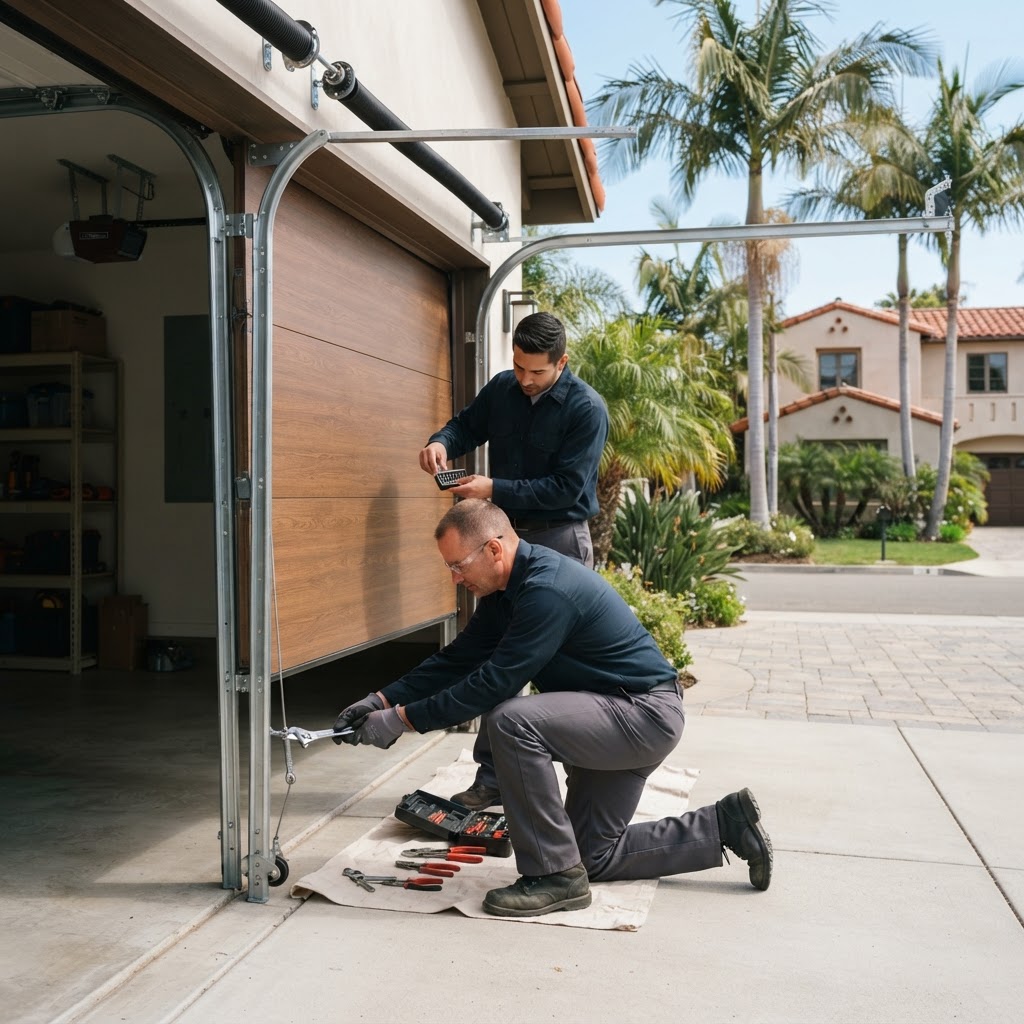
Garage door springs store tremendous tension and can cause serious injury or death if handled improperly. Professional installers have the tools, training, and experience to work safely with these high-tension components. Even if you measure and purchase your own door, having professionals handle the actual installation protects you from these risks. For more information about garage door dangers, read our guide on When DIY Garage Door Repairs Turn Dangerous: Warning Signs.
Heavy door panels, especially for double-wide or custom-sized doors, require multiple people and proper equipment to position safely. Dropping or mishandling these panels can cause property damage and personal injury.
Electrical work for garage door openers must meet code requirements and be performed safely. While simple opener replacements might be DIY-friendly, new installations requiring circuit additions or modifications should involve licensed electricians.
Warranty and Long-Term Support Considerations
Many garage door manufacturers require professional installation to maintain product warranties. DIY installation might void these warranties, leaving you without recourse if manufacturing defects appear.
Professional installers also provide workmanship warranties that cover installation-related issues. If your door develops operational problems due to installation errors, professional installers return to correct them at no additional charge, while DIY installers bear the full cost of fixing their own mistakes.
Establishing a relationship with a professional installation company provides ongoing support for maintenance, adjustments, and future repairs. Companies familiar with your specific installation can service it more efficiently than technicians encountering your door for the first time.
Conclusion: Making the Right Garage Door Size Decision for Your LA Home
Choosing the right garage door size installation for your Los Angeles home requires careful consideration of standard garage door dimensions, accurate measurement of your garage door rough opening, understanding of local building codes, and honest assessment of your vehicle and functional needs. Whether you opt for standard residential garage door sizes or custom garage door sizing, making informed decisions based on your specific situation ensures successful results.
The unique characteristics of Southern California homes, from historic architecture to challenging hillside locations, mean that one-size-fits-all approaches rarely work. Taking time to measure garage door opening dimensions accurately, understanding when single vs double garage door configurations make sense, and considering both current and future needs prevents costly mistakes and ensures long-term satisfaction.
Remember that your garage door width height affects not just aesthetics but also functionality, safety, and property value. Los Angeles building codes garage requirements exist to ensure safe, reliable installations, and working within these parameters protects your investment and provides peace of mind.
Whether you're in Encino Service Area, Van Nuys Service Area, Woodland Hills Service Area, or anywhere else in the greater Los Angeles region, professional guidance ensures your garage door size installation meets your needs and exceeds your expectations.
Get Expert Help with Your Garage Door Sizing Project
Don't leave your garage door size installation to chance. The experienced professionals at MSB Garage Door Repair understand the unique requirements of Los Angeles homes and can help you select the perfect dimensions for your property. We provide accurate measurements, expert recommendations, and professional installation that ensures your new garage door operates flawlessly for years to come.
Whether you need standard residential garage door sizes or custom garage door sizing for a unique application, our team has the knowledge and experience to guide you through every step of the process. We're familiar with Los Angeles building codes garage requirements across all local jurisdictions and can handle permit applications and inspections on your behalf.
Contact MSB Garage Door Repair today at (818) 650-7697 for a free consultation and accurate measurement of your garage door opening. You can also schedule your appointment online at your convenience. Let us help you make the right garage door size decision for your LA home.
Related articles


Need professional garage door service?
Repairs, replacements and maintenance across Los Angeles and the San Fernando Valley. Same-day service and free written estimates.